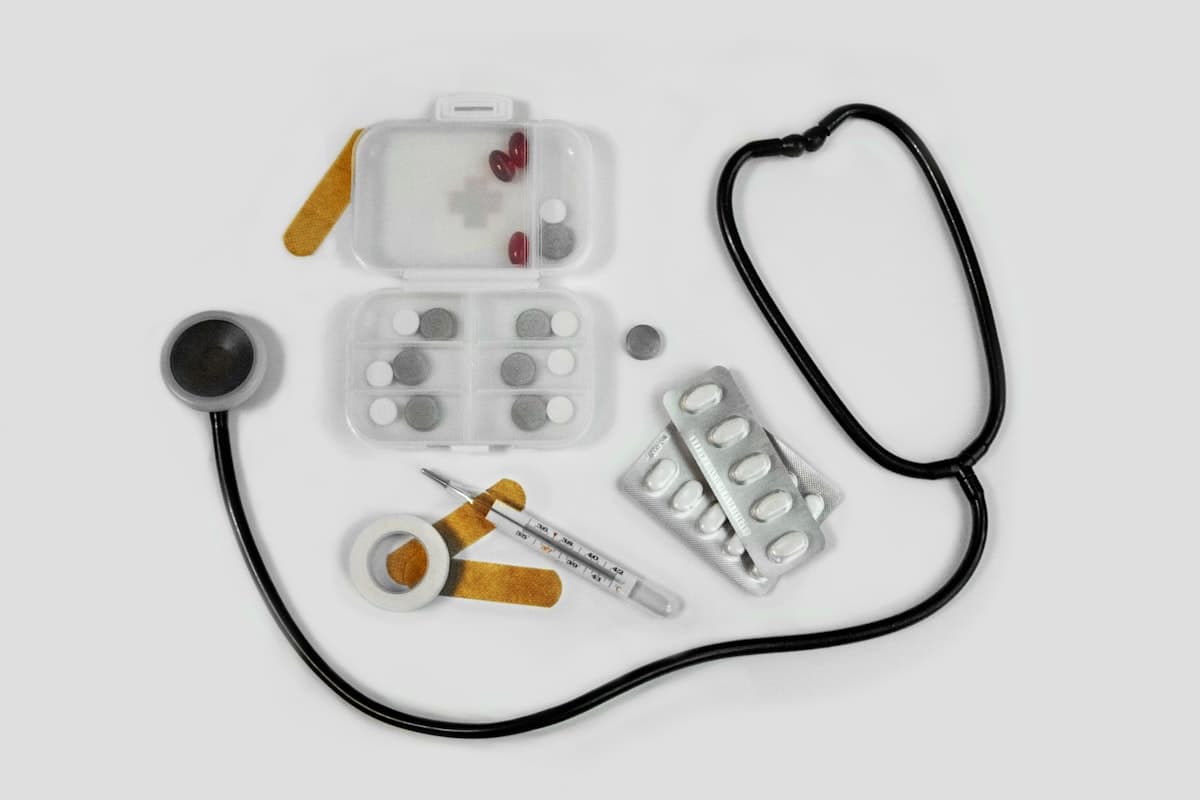
A minimalist medicine cabinet checklist for autumn and winter
A medicine cabinet does not need to be a small pharmacy. A short list of the right types of medicine covers most of the minor illnesses of a cold season, and a short list is also one you can keep in date. This checklist says what to keep, what to leave out and how to store it.
The list is built on the medicine cabinet advice published by the NHS in the UK. It names types of medicine, not brands. In South Africa several of these types (some antihistamines, anti-diarrhoea medicines and many ibuprofen packs) are Schedule 2 medicines, sold by a pharmacist without a prescription, so you will find them at the pharmacy counter rather than on the open shelf.
The year-round basics
The NHS medicine cabinet list has these types of medicine:
- Pain relief. Paracetamol, ibuprofen or both, for aches, headaches and a high temperature. Children need products made for their age; aspirin is not for children under 16.
- Antihistamines. Tablets for allergic reactions and a cream for bites and stings. Some antihistamines make you drowsy; the pharmacist can tell you which ones do not.
- Oral rehydration sachets. They replace the water and salts lost through a high temperature, diarrhoea or vomiting. They do not treat the cause.
- Antiseptic cream for small cuts, bites and stings.
- Anti-diarrhoea medicine for adults. The pack states the minimum age.
- Indigestion treatment, such as an antacid, for heartburn after a heavy meal.
The same list adds sunscreen and a first aid kit. For what goes into a kit of plasters and dressings, see our travel first aid kit list and the car first-aid kit article.
How much does your basket cost?
See how much your basket costs across pharmacies — free, no registration
Compare pricesWhat to add for autumn and winter
- Saline nasal spray. It rinses a blocked or runny nose and has no time limit, so most of the family can use it.
- A decongestant nasal spray for adults, for the nights when you cannot breathe through your nose. Use it only for the few days printed on the pack; the NHS says decongestants should not be used by children under 6.
- Throat lozenges, one pack, for the first sore throat of the season. Our article on sore throat remedies explains the different types.
- Vitamin D, if you live in the UK. The NHS advises everyone to consider a daily 10 microgram supplement in autumn and winter. In South Africa the seasons run the other way, so ask your pharmacist whether you need one. More in our article on vitamin D deficiency.
- A thermometer, so you know whether you have a temperature rather than guess.
A cough syrup can wait until someone has a cough, because the right one depends on whether the cough is dry or chesty. Our guide to cough syrup for a dry or wet cough explains the difference.
What to leave out
- Several cold and flu products. Most of them contain paracetamol, and a second or third product makes it easy to take too much. One plain painkiller covers aches and temperature; see our guide to cold and flu tablets.
- Leftover antibiotics. Antibiotics are prescribed for one illness and one person. Return leftovers to a pharmacy.
- A shelf of supplements. If you take something regularly, keep that one; the rest tends to expire unopened.
- Several packs of painkillers. One pack of each is enough at home. In the UK, paracetamol is sold in packs of up to 16 tablets in shops and 32 in pharmacies, and the medicines regulator discourages offers that push buyers towards more than one pack of a painkiller.
How to store your medicine cabinet
The NHS advice is a high, lockable cupboard in a cool, dry place, out of sight and reach of children. A bathroom cabinet is usually neither cool nor dry. Keep each medicine in its box with the leaflet, so you can check the dose and the expiry date when you need it.
Check the expiry dates at the start of each season. Do not use a medicine past its date; take it to a pharmacy for safe disposal. Our article on expired medicines explains why.
When the medicine cabinet is not enough
A home medicine cabinet is for minor illnesses. Contact a doctor (in the UK, your GP or NHS 111) if a high temperature lasts more than 3 days, cold symptoms have not improved after 10 days, someone is short of breath or has chest pain, or a child seems unusually unwell. If you are not sure, ask a pharmacist; that is what the counter is for.
Your checklist
- Paracetamol and ibuprofen (adult and, if needed, children's versions)
- An antihistamine tablet and a bite and sting cream
- Oral rehydration sachets
- Antiseptic cream
- Anti-diarrhoea medicine for adults
- An indigestion treatment
- Saline nasal spray and, for adults, a decongestant spray
- Throat lozenges
- Vitamin D (UK, autumn and winter)
- A thermometer and a small first aid kit
How to buy it without overpaying
Buying the list once, before the first cold, means one delivery charge instead of one for every product you run out of. Put the whole checklist into one basket and compare the total: each online pharmacy sets its own prices and its own delivery charge, and the one with the cheapest painkiller is not always the cheapest for ten products. Compare packs by active substance, strength and pack size rather than by the brand on the box.
CheaperForDrug compares medicines and supplements; plasters and thermometers are outside the comparison. Comparing is free, with no account and no limit, and prices are checked at the moment you compare. Our page on cheap non-prescription medicines shows the comparison by need, and the cheapest online pharmacy for your basket explains why the answer changes from basket to basket.
Put your winter checklist in one basket and compare the total with delivery.
Sources
- NHS Shropshire, Telford and Wrekin: Medicine cabinet
- NHS: Common cold (page reviewed 22 March 2024)
- NHS: Vitamin D
- MHRA: Best practice guidance on the sale of medicines for pain relief (March 2025)
- South African Department of Health: Database of Medicine Prices (schedule of each pack, 1 October 2026)
Updated 10 October 2026. This article is general information, not medical advice. Ask a pharmacist or doctor before using a medicine, especially for children, during pregnancy or with a long-term condition.