Echinacea and Elderberry for Immunity: Do They Actually Work?
September. Children head back to school, daylight hours shorten, and pharmacy shelves fill up with prominent displays of "immunity" products. Two plants take centre stage every year: echinacea (coneflower) and elderberry (Sambucus nigra). Syrups, tablets, drops, teas — hundreds of variants at dozens of price points.
But do these plants actually help? The real question is not whether they "boost immunity" in some vague sense (that phrase is so broad it means almost nothing), but something more specific: Do they shorten the duration of a cold? Do they reduce the risk of getting sick? How should you take them to get any benefit? And equally important — when should you avoid them?
This article is not selling miracle herbs. We look at what the research genuinely shows — and what remains uncertain.
Echinacea — Why All the Hype?
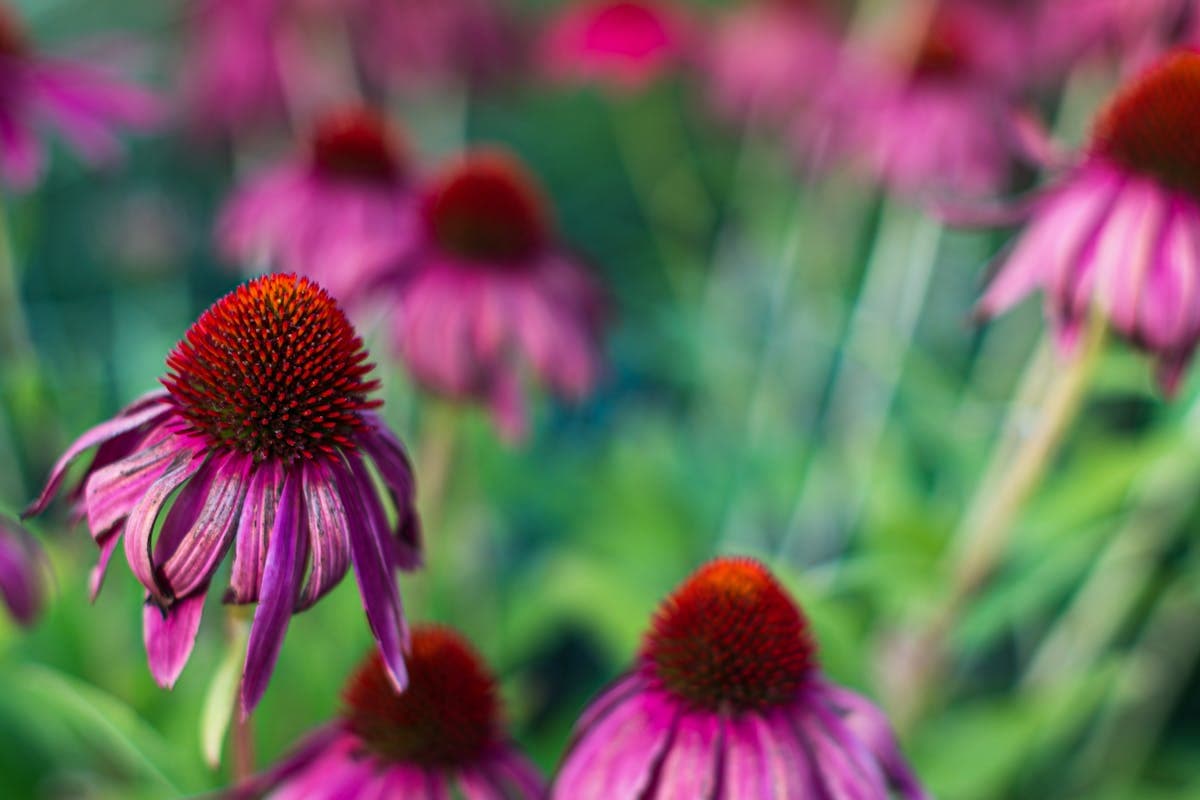
Purple coneflower (Echinacea purpurea) is a perennial plant native to North America. Indigenous peoples used it for centuries to treat infections and wounds. It arrived in Europe in the late 19th century and has never left pharmacy shelves since.
Why is it popular? Because it contains a range of bioactive compounds: alkylamides, caffeic acid derivatives (including echinacoside and cichoric acid), polysaccharides, and glycoproteins. In laboratory conditions and animal models, these compounds show immune-stimulating activity — they activate macrophages, natural killer (NK) cells, and increase interferon production.
The trouble starts when translating those findings into real clinical trials with human participants.
What Do Clinical Studies Say About Echinacea?
Research on echinacea is one of the more frustrating chapters in herbal medicine. Results are inconsistent, and the differences between studies are difficult to explain without looking closely at methodology. A few conclusions that can be drawn from meta-analyses:
- Prevention of upper respiratory tract infections: Some systematic reviews (including the Cochrane review, updated periodically) suggest a moderate reduction in cold risk of roughly 10–35% with regular use — but only for standardised preparations of E. purpurea.
- Shortening the duration of a cold: Data suggest a reduction of around 1–1.5 days, though the differences are statistically small and not confirmed by every study.
- Treating a cold once it has already started: Evidence is weak and inconsistent. Echinacea taken after symptoms appear may have a minimal effect, though the data are inconclusive.
The core problem: The market offers enormous variety — different species (E. purpurea, E. angustifolia, E. pallida), different plant parts (root vs. aerial parts vs. whole extract), different concentrations, different formulations. A study conducted on one specific preparation does not necessarily apply to another. When you buy a supplement labelled "echinacea," you may be getting something quite different from whatever was actually tested in the study the manufacturer cites.
Forms and Dosing of Echinacea
If you decide to try echinacea, check what you are actually buying:
- Extract from E. purpurea (aerial parts + root): The best-researched form. Look for preparations standardised to alkylamide or echinacoside content.
- Dry extract in tablets or capsules: A convenient form that is easier to dose accurately.
- Drops or tincture: A traditional form, but harder to dose — it is difficult to know exactly how many active compounds are present.
- Herbal teas: Low active compound content. More of a ritual than an effective supplement.
Typical dosing:
- For prevention (seasonal course in autumn/winter): 400–500 mg of standardised extract once or twice daily for 8–10 weeks, followed by a break of at least 2 weeks.
- During an active infection: Higher doses (up to 900–1,000 mg/day) for 7–10 days — though evidence for effectiveness here is weaker than for prevention.
- Children over 12: Half the adult dose; for younger children it is worth discussing with a paediatrician first.
Important: Continuous use of echinacea for many months without a break is not recommended. Not because "the immune system stops responding" (a popular myth with no solid basis), but because long-term safety has been less thoroughly studied.
Elderberry (Sambucus nigra) — More Modest Evidence, But Promising
Elderberry is a European shrub known in folk medicine for centuries. What interests us here is primarily the fruit extract (Sambucus nigra fructus), which is rich in anthocyanins, flavonoids (including rutin), and phenolic compounds.
In laboratory studies, elderberry extract shows antiviral activity — it inhibits the entry of some influenza viruses and rhinoviruses into cells. The question, as always, is whether this translates into real-world effects in people.
What Do Clinical Studies Say?
The evidence base here is considerably smaller than for echinacea. A handful of randomised placebo-controlled trials indicate:
How much does your basket cost?
See how much your basket costs across pharmacies — free, no registration
Compare prices- Standardised elderberry syrup (e.g. Sambucol) taken during influenza may shorten the course of illness by around 3–4 days compared to placebo — but these were small trials (a few dozen participants).
- A 2016 meta-analysis (Hawkins et al.) suggests a reduction in the duration of colds and flu of roughly 2 days.
- One study in air travellers suggested fewer days with flu-like symptoms.
Caveats: Trial sizes are small, and some research was industry-funded. Elderberry does not replace the flu vaccine, which remains by far the most effective preventive intervention. There is also no convincing evidence that elderberry prevents infections — the data relate mainly to shortening their course once they start.
Forms and Dosing of Elderberry
- Standardised syrup (e.g. Sambucol, Immuno Forte, etc.): The best-researched form. Look for preparations that declare standardisation to anthocyanin content.
- Dry extract in capsules: A convenient alternative to syrups.
- Home-made preparations (syrups, preserves): Can be tasty, but the active compound content is unpredictable. Also be careful with raw berries — they contain sambunigrin, which can cause nausea and vomiting. Heat treatment deactivates it.
Typical dosing:
- During an infection (standardised syrup): As directed by the manufacturer — usually 10–15 ml taken 2–4 times daily for 5–7 days.
- For prevention: Lower doses over a few weeks — though this is where the evidence is weakest.
- Children over 1 year of age: Children's syrups, dose according to body weight and the manufacturer's instructions.
Echinacea and Elderberry Together — Does Combining Them Make Sense?
Many products combine echinacea with elderberry, vitamin C, and zinc. It is a popular marketing strategy — "more ingredients = stronger effect." In practice:
- There are no good clinical trials confirming that the combination works better than each ingredient on its own.
- Combination products are usually more expensive, and the dose of each individual ingredient is often lower than in single-ingredient products.
- Vitamin C and zinc have their own independent evidence base — but that is a topic for a separate article.
If effectiveness matters to you, it is better to choose one well-standardised single-ingredient product (echinacea or elderberry) than a multi-ingredient blend with a low dose of everything.
When to Be Cautious — Important Contraindications
Echinacea and elderberry are generally well tolerated by healthy adults, but there are groups who should proceed carefully or avoid them altogether.
Autoimmune Conditions and Immunosuppression
This is the most important contraindication for echinacea. Echinacea acts as an immune stimulant — and that can be a problem for people whose immune system is already overactive, or for those taking immunosuppressive drugs (after organ transplants, or for rheumatoid arthritis, multiple sclerosis, lupus, inflammatory bowel disease, or other autoimmune conditions).
The same cannot be stated with certainty about elderberry — its mechanism of action differs — but if you have an active autoimmune condition, it is worth discussing supplementation with your doctor before starting.
Allergy — Note for Asthma and Allergy Sufferers
Echinacea belongs to the Asteraceae family (daisies/composites) — the same family as ragweed, chamomile, arnica, chrysanthemums, and daisies. People allergic to plants in this family are at risk of cross-reactive allergy to echinacea. Reactions can range from hives and worsening of asthma to (rare but documented) anaphylactic reactions. People with asthma should use echinacea with particular caution or avoid it entirely.
Allergic reactions to elderberry are reported less frequently, but they do occur.
Pregnancy and Breastfeeding
Safety data for echinacea use during pregnancy are insufficient. Some retrospective analyses found no harm, but there are no robust prospective studies. The precautionary principle applies: avoid or consult your doctor. The same applies to elderberry.
Children Under 1–2 Years of Age
Standardised elderberry syrups are generally not recommended for infants under 1 year of age (risk of botulism from honey-based syrups, and unpredictable composition). Echinacea for young children requires a paediatrician's advice.
Drug Interactions
- Immunosuppressive drugs (cyclosporine, tacrolimus, methotrexate) — immune stimulation may potentially reduce their effectiveness.
- Drugs metabolised by CYP3A4 — echinacea may affect how certain drugs are processed in the liver; if you take any medicines long-term, check with your pharmacist.
- Anticoagulants — elderberry contains vitamin K and could theoretically affect clotting, though clinical data are very limited.
Being Realistic: What These Supplements Can and Cannot Do
It is worth summarising what to expect from these herbs honestly:
- They will not "boost" a healthy immune system in any unlimited sense — the immune system is a complex network, and "boosting" is too vague a word to mean anything useful.
- They may modestly reduce the risk of colds and/or shorten their course — the effect is moderate to small, and depends on the preparation and the individual.
- They do not replace the flu vaccine — vaccination has far stronger evidence of effectiveness.
- They do not treat influenza or COVID-19 — for serious viral infections, herbal supplements are at best supportive, not curative.
- The foundations of good immunity are sleep, a diet rich in vegetables and fruit, regular physical activity, not smoking, and avoiding chronic stress — no supplement replaces these fundamentals.
When to Start — A Practical Seasonal Strategy
If you still want to try echinacea or elderberry, a sensible approach is:
- Start before the season — September/October, before children return to intensive contact at school and before you step from warm summer into cold weather.
- Choose a standardised, reputable preparation — check whether the manufacturer declares the content of active compounds. Generic "echinacea" without a standardisation statement is a purchase in the dark.
- Use it for a defined period — 6–8 weeks of preventive use, then a 2-week break; repeat if needed.
- When infection symptoms start — if using elderberry, begin as early as possible after the first signs appear, not on day three of illness.
- Monitor your response — if after a week of use you notice a rash, skin itching, or worsening allergy symptoms, stop and speak with your doctor or pharmacist.
Frequently Asked Questions
Can I take echinacea and elderberry at the same time?
There are no known serious interactions between these two herbs. However, as noted above, combination products often contain lower doses of each ingredient. If you want to find out which preparation actually works for you, starting with one at a time makes more sense.
Will echinacea help if I am already coming down with a cold?
Evidence here is weaker than for prevention. A few studies suggest a small benefit if taken very early (within the first few hours), but this is less well established than with elderberry, where starting quickly appears more important.
Can children take echinacea?
Standard preparations are usually available for children over 12 at half the adult dose. For younger children (2–12 years) there are paediatric-specific products, but it is always worth discussing with a paediatrician — especially if the child has an allergy to plants in the daisy family or atopic conditions.
How long can elderberry be taken?
Most studies cover courses of up to 2 weeks. Preventive use over a few weeks has not shown serious side effects, but long-term safety (months, years) is poorly studied. Use it seasonally, not year-round.
Does elderflower tea work the same as elderberry fruit extract?
No. Research relates primarily to standardised extracts from elderberry fruits, which are rich in anthocyanins. Flowers have a different bioactive profile, and there is no clinical data comparable to that for fruit extracts. Elderflower tea is a pleasant drink with mild diaphoretic properties, but it is not the same as a standardised elderberry syrup.
Does it make sense to take echinacea all winter?
Data do not support continuous use over intermittent courses. ESCOP and HMPC monographs both recommend courses with breaks. Breaks also let you assess whether the preparation is actually having a real effect for you.
Summary
✅ Echinacea purpurea in standardised preparations may moderately reduce the risk of colds and modestly shorten their course — evidence quality is moderate.
✅ Elderberry fruit extract has promising, if limited, data suggesting it shortens colds and flu by 1–4 days — particularly when started early.
✅ Choose standardised preparations — "echinacea" without a declaration of active compound content is a purchase in the dark; the same applies to elderberry.
✅ People with autoimmune conditions, allergies to plants in the daisy family, or those on immunosuppressive drugs should consult a doctor before use, or avoid echinacea altogether.
✅ Pregnancy, breastfeeding, and young children — require consultation before starting any herbal supplement.
✅ No herb replaces the flu vaccine, sleep, diet, and exercise — these are still the foundations of strong immunity, not supplements.
✅ Use seasonally and with breaks, observe how your body responds, and do not buy blindly — check the composition and standardisation before purchasing.
Disclaimer
This article is intended for educational purposes only and does not constitute medical or pharmaceutical advice. Before taking any supplement — especially if you have a chronic condition, are pregnant, or take prescription medicines — consult a doctor or pharmacist. Everyone responds differently.
Echinacea and elderberry are supplements that may support immunity — but only if you choose a quality preparation. The market offers dozens of options at very different price points. Before paying a premium for a brand name, use CheaperForDrug to compare what the same active ingredients in the same form cost across 100+ pharmacies — real savings come from comparing your whole basket, not just a single pack.