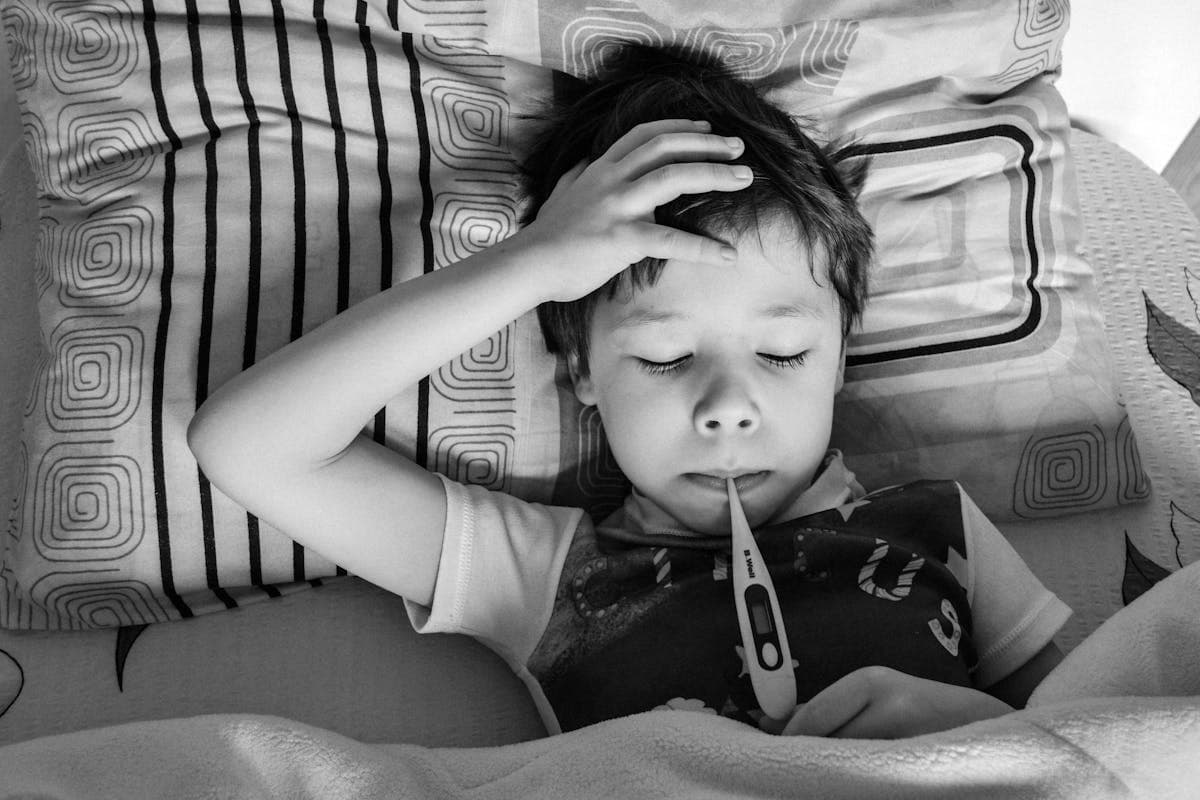
Fever Reducers for Children: Paracetamol vs Ibuprofen and Correct Dosing
A child with a fever can turn the whole household upside down — especially when it strikes in the middle of the night or right before an important event. In those moments, parents reach for syrup or suppositories almost on instinct. But do we really know how much to give, and how to choose between paracetamol and ibuprofen?
The good news is that both medicines are effective and safe — provided they are dosed correctly. The bad news: most mistakes parents make come down to exactly that — incorrect dosing. Too little and the medicine does nothing; too much and it can cause harm. In this article we have gathered everything you need to know, from converting mg to kg of body weight, to choosing the right form, to the situations where seeing a doctor cannot wait.
Please note: this article is educational and does not replace advice from a doctor or pharmacist. If in doubt, always consult a healthcare professional.
When does a child's fever need treatment?
Fever is the immune system's natural response to infection. In itself it is not a disease — it is a symptom. It is worth knowing that bringing the temperature down does not speed up recovery, but it does improve the child's comfort, which matters enormously in practice.
- Low-grade fever: 37.1–38.0 °C (98.8–100.4 °F) — observe and keep fluids up; medicine is not always necessary
- Fever: 38.1–39.0 °C (100.6–102.2 °F) — consider giving medicine, especially if the child is irritable or distressed
- High fever: above 39.0 °C (102.2 °F) — a fever reducer is advisable
- Very high fever: above 40.0 °C (104 °F) — requires immediate action and contact with a doctor
Doctors emphasise: more important than the temperature reading is how the child is behaving. A child at 38.5 °C (101.3 °F) who is playing and eating normally may need nothing more than monitoring. A child who is lethargic and refusing fluids at 38 °C (100.4 °F) needs prompt attention.
Equally important alongside medication is keeping the child well hydrated. Fever increases water loss through the skin and breath — a feverish child needs more fluids than usual. Offer water, mild herbal teas (unsweetened), and for infants, breast milk or formula. Avoid over-dressing or overheating the room: light, breathable clothing in a room at around 18–20 °C (64–68 °F) helps the body shed heat naturally.
Paracetamol — the classic choice for infants and toddlers
Paracetamol (acetaminophen) is the active ingredient in many popular over-the-counter preparations. It is the first-choice medicine for infants and also for children in whom ibuprofen is contraindicated.
Paracetamol dosing by body weight
The basic rule: 10–15 mg of paracetamol per kilogram of body weight per dose.
- Child weighing 6 kg (13 lb) → 60–90 mg per dose
- Child weighing 10 kg (22 lb) → 100–150 mg per dose
- Child weighing 15 kg (33 lb) → 150–225 mg per dose
- Child weighing 20 kg (44 lb) → 200–300 mg per dose
- Child weighing 30 kg (66 lb) → 300–450 mg per dose
Maximum daily dose: 60 mg/kg body weight, no more than 4 doses per day. Leave at least 4–6 hours between doses.
Bear in mind that paracetamol syrups come in different concentrations. Common strengths are 120 mg/5 ml (infant preparations) and 250 mg/5 ml (for older children). Before giving a dose, always calculate how many millilitres of the specific syrup you have corresponds to the correct dose for your child. Example: a 12 kg child needs 120–180 mg of paracetamol. Using a 120 mg/5 ml syrup that is 5–7.5 ml; using a 250 mg/5 ml syrup it is only 2.4–3.6 ml. The difference is significant — which is why you should never use a kitchen teaspoon. Always use the graduated syringe or measuring spoon that comes with the product.
Paracetamol forms for children
- Oral syrup/suspension — most commonly 120 mg/5 ml or 250 mg/5 ml. The easiest form for precise dosing with a measuring syringe or graduated spoon. Suitable from birth (consult a doctor for newborns).
- Rectal suppositories — available in various strengths (80 mg, 125 mg, 150 mg, 250 mg, 500 mg). Ideal when the child is vomiting or asleep. Absorption is slower and less predictable than with oral administration.
- Chewable tablets / swallowable tablets — for older children (generally from age 6–12, depending on the product).
Paracetamol syrups can have different concentrations — always check how many mg of active ingredient are in 1 ml or 5 ml, and calculate the dose for your specific child rather than relying on the age guide printed on the packaging.
Ibuprofen — stronger and longer-acting
Ibuprofen is a non-steroidal anti-inflammatory drug (NSAID) that works as a fever reducer, a painkiller, and an anti-inflammatory agent. Its effect lasts longer than paracetamol's — up to 6–8 hours. It is used in children over 3 months of age (or 3–6 kg, depending on the product — always read the leaflet).
How much does your basket cost?
See how much your basket costs across pharmacies — free, no registration
Compare pricesIbuprofen dosing by body weight
The basic rule: 5–10 mg of ibuprofen per kilogram of body weight per dose.
- Child weighing 6 kg (13 lb) → 30–60 mg per dose
- Child weighing 10 kg (22 lb) → 50–100 mg per dose
- Child weighing 15 kg (33 lb) → 75–150 mg per dose
- Child weighing 20 kg (44 lb) → 100–200 mg per dose
- Child weighing 30 kg (66 lb) → 150–300 mg per dose
Maximum daily dose: 30–40 mg/kg body weight, no more than 3–4 doses per day. Leave at least 6–8 hours between doses.
Children's ibuprofen suspension is usually 100 mg/5 ml. For a child weighing 14 kg, a single dose will be 70–140 mg, which is 3.5–7 ml of suspension. Key point: always use the measuring device included with the specific pack — different products may have slightly different scales. An oral syringe is more accurate than a measuring spoon and makes it easier to give medicine to small children by squirting it gently inside the cheek.
Ibuprofen forms for children
- Oral suspension — most commonly 100 mg/5 ml. A fruity taste makes it easier to give, but may encourage children to want more — always use the measuring device supplied.
- Rectal suppositories — available in 60 mg, 125 mg and 200 mg strengths. Useful when the child is vomiting or having difficulty swallowing.
- Coated tablets — for children over 20 kg or older.
When is ibuprofen contraindicated in children?
- Infants under 3 months of age or under 3–6 kg (depending on the product)
- Dehydration or vomiting that prevents adequate fluid intake — risk of kidney damage
- Chickenpox — ibuprofen may worsen bacterial complications
- Asthma if NSAIDs trigger attacks
- Kidney or liver disease
- History of gastrointestinal bleeding
Paracetamol vs ibuprofen — which to choose?
There is no single answer for every child, but a few general guidelines help with the decision:
- Infants under 3 months: paracetamol only (and only after consulting a doctor)
- Fever with chickenpox: paracetamol only
- Pain + fever + inflammation (e.g. ear infection): ibuprofen may be more effective
- Night-time fever needing long-lasting relief: ibuprofen (works 6–8 h vs 4–6 h for paracetamol)
- Child prone to vomiting: suppositories rather than syrup
- Child who is dehydrated or has had diarrhoea: use ibuprofen with caution; paracetamol is preferred
Alternating paracetamol and ibuprofen
Alternating the two medicines is a topic that sparks debate among parents and doctors alike. Here are the facts:
Alternating is possible, but should be reserved for situations where one medicine does not control the fever for long enough — not as a routine approach. Major paediatric societies advise caution, and this strategy should only be used after consulting a doctor.
- Never give both medicines at the same time
- Always maintain a minimum gap: if you have given paracetamol, ibuprofen can be given no sooner than 2–3 hours later (and vice versa) — but always check with a doctor or pharmacist first
- Keep a written record of times and doses — it is easy to lose track when alternating
- Alternating increases the risk of confusion and accidental overdose
What you should NEVER give a child for fever
One rule that must not be broken: NEVER give aspirin (acetylsalicylic acid) to children or teenagers for a fever caused by a viral infection.
Aspirin in children and young people with viral infections (flu, chickenpox, other viruses) is linked to a risk of Reye's syndrome — a rare but very serious complication that damages the liver and brain and can be fatal. Aspirin is contraindicated in children under 12 years of age (some guidelines say under 16) for the treatment of fever. Symptoms of Reye's syndrome — nausea, vomiting, altered consciousness — can appear several days after a viral illness and require immediate hospitalisation.
It is worth checking the ingredients of multi-symptom cold and flu preparations available without a prescription, as some may contain acetylsalicylic acid. Always read the leaflet before giving your child any medicine.
When does a child's fever require a visit to the doctor?
There are several absolute indications for immediate contact with a doctor or emergency services:
- Age under 3 months with any fever above 38 °C (100.4 °F) — always seek medical advice
- Fever above 40 °C (104 °F) regardless of age
- Fever lasting more than 3–5 days without improvement
- Febrile seizures — call emergency services
- A rash accompanying the fever, especially red or purple-blue patches that do not fade under pressure (possible petechiae)
- Severe headache with a stiff neck — possible signs of meningitis
- Difficulty breathing or rapid breathing
- The child refuses to drink for more than 8 hours, or shows signs of dehydration (no tears, dry mouth, infrequent urination)
- The child is excessively sleepy, difficult to rouse, or unresponsive
- Fever returns after clearing — may suggest a secondary bacterial infection
Frequently asked questions
Can I dose medicine by age rather than body weight?
The age-based dosing guide printed on the packaging is only an approximate reference for an average child. Children of the same age can differ considerably in weight — a 5 kg difference between children in the same age bracket is perfectly normal. Always dose according to your child's current body weight, using the measuring device included with the syrup or an oral syringe. If in doubt, ask your pharmacist.
Why isn't the syrup working and the fever isn't coming down?
This can mean several things: the dose may be too small (it is worth recalculating mg/kg), not enough time may have passed (paracetamol can take 30–60 minutes to take full effect, ibuprofen up to 1–2 hours), or the infection may require specific treatment (for example, an antibiotic for bacterial tonsillitis). If the medicine has not worked within 1–2 hours of a correct dose, contact a doctor.
Do suppositories work the same as syrup?
Suppositories are a good alternative when the child is vomiting or refusing to take syrup. However, their absorption is slower and less predictable than with oral administration — the effect may appear after 30–90 minutes (versus 20–60 minutes for syrup). Suppositories are not better or worse — they are simply a different route of administration, useful in certain situations.
My child has a fever and diarrhoea — which medicine should I choose?
When fever and diarrhoea occur together (and therefore carry a risk of dehydration), ibuprofen should be used with great caution or avoided altogether — it can increase the burden on the kidneys. Paracetamol is the better choice. The priority is rehydration: give small amounts of fluid (water, oral rehydration solution) every few minutes, and if signs of worsening dehydration appear, seek medical help.
How many doses can be given in one day?
For paracetamol: a maximum of 4 doses per day, no more frequently than every 4–6 hours, with a total daily dose not exceeding 60 mg/kg. For ibuprofen: a maximum of 3–4 doses per day, no more frequently than every 6–8 hours, with a total daily dose not exceeding 30–40 mg/kg. Never exceed the recommended doses — paracetamol overdose is particularly dangerous because signs of liver damage may appear with a delay.
How quickly should the temperature drop after giving medicine?
Expect a drop of 1–2 °C (1.8–3.6 °F) within 1–2 hours. The goal of treatment is not to bring the temperature to a perfect 36.6 °C (97.9 °F) but to improve how the child feels. If your child is active, drinking willingly and not distressed after the medicine, it is working — even if the temperature is still 37.8 °C (100 °F).
Summary
✅ Always dose by body weight — paracetamol 10–15 mg/kg, ibuprofen 5–10 mg/kg per dose.
✅ Paracetamol is safe from birth (consult a doctor for newborns and young infants); ibuprofen from 3 months of age.
✅ Ibuprofen lasts longer (6–8 h) and has additional anti-inflammatory action — particularly useful for fever with inflammation such as an ear infection.
✅ Alternating is possible, but should be used thoughtfully and after consulting a doctor, with careful written records of times and doses.
✅ Never give a child aspirin for fever because of the risk of life-threatening Reye's syndrome.
✅ Watch the child, not just the thermometer — behaviour, hydration and activity level are more important indicators than the number on the display.
✅ Contact a doctor when fever exceeds 40 °C (104 °F), lasts more than 3–5 days, is accompanied by a rash, the child refuses to drink, or you have any concerns.
Disclaimer
This article is for educational purposes only and does not constitute medical advice or a substitute for a consultation with a doctor or pharmacist. Always discuss your child's medicine dosing with a paediatrician or pharmacist — especially for infants, children with chronic conditions, and whenever your child's condition concerns you. In an emergency, call your local emergency number or seek immediate medical attention.
When your child falls ill, you need to act quickly — and wisely. It helps to have the right medicine in the right form before the fever strikes. When you build a basket on CheaperForDrug, you can add a paracetamol syrup, ibuprofen suppositories and a children's oral rehydration solution all at once, then compare the total cost of the whole set across 100+ pharmacies. Real savings come from comparing a whole basket, not just a single pack.