Fever in Adults and Children: When and How to Bring It Down
The thermometer reads 38.5 °C. The first question that crosses every parent's mind — and most adults' — is: should I take something now? The answer is not as straightforward as it might seem. Fever is not a disease; it is a symptom. And, more importantly, it is a valuable defence tool your body has built in. Before you reach for a tablet, it is worth understanding why.
In this article you will learn exactly what fever is, why letting it run its course is sometimes the right call, when you genuinely need to treat it, which medicine to use and in what dose — for both adults and children. You will also learn the red-flag signs that require immediate medical attention.
No unnecessary medical jargon — just clear, practical knowledge you can put to use straight away.
Fever as a Defence Mechanism — Why It Deserves Respect
When viruses or bacteria enter the body, the immune system triggers an alarm. One of its first moves is a deliberate rise in body temperature — and this is no accident; it is a precisely engineered strategy.
An elevated temperature works on several levels at once:
- It slows the replication of viruses and bacteria — many pathogens thrive at 37 °C; a rise to 38–39 °C makes reproduction significantly harder for them
- It activates lymphocytes — immune cells work more efficiently at higher temperatures
- It speeds up interferon production — a protein that directly blocks viral replication
- It acts bacteriostatically — it limits bacteria's ability to absorb iron, which they need in order to grow
In other words: bringing fever down too early can actually prolong illness, because it strips the body of one of its primary defensive tools. That does not mean you should never treat fever — but it does mean you should do so consciously.
How to Measure Temperature — and What the Numbers Mean
Normal body temperature is 36.6–37.2 °C (97.9–99.0 °F) (measured under the arm). The categories are:
- Low-grade fever: 37.3–38.0 °C (99.1–100.4 °F) — the body is signalling an active fight; no medication is usually needed
- Fever: 38.1–39.0 °C (100.6–102.2 °F) — a clear sign of infection; treatment depends on how the person is feeling
- High fever: 39.1–40.0 °C (102.4–104.0 °F) — warrants close monitoring and usually treatment
- Very high fever: above 40.0 °C (104.0 °F) — requires prompt action
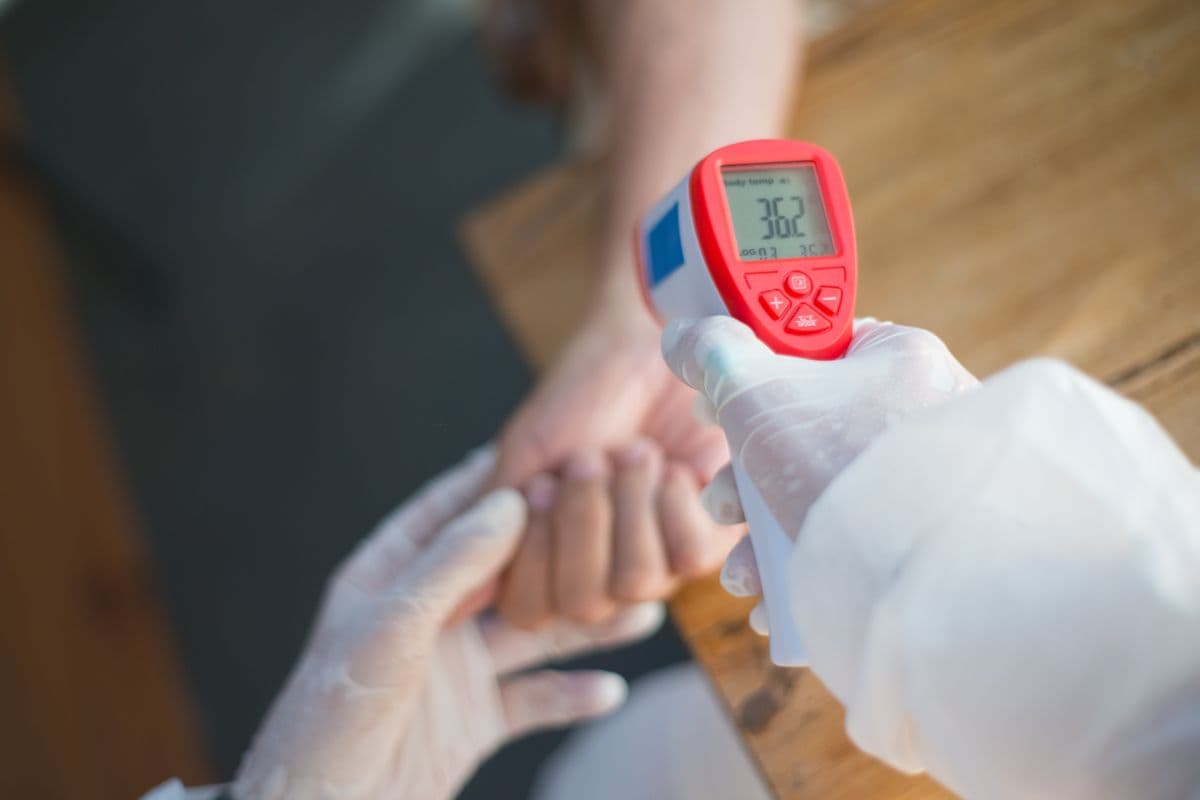
A note on measurement method: underarm temperature runs about 0.3–0.5 °C (0.5–0.9 °F) lower than rectal temperature (used for small babies) and roughly 0.3 °C lower than ear temperature. Always check which mode your thermometer displays.
When to Treat Fever — Specific Guidelines
In Adults
In adults, it is worth treating fever when:
- Temperature exceeds 38.5 °C (101.3 °F) and causes noticeable discomfort (headache, muscle aches, chills)
- Fever is disrupting sleep or normal functioning
- You have a chronic condition (e.g. heart disease, epilepsy, diabetes) — even a lower fever may warrant treatment
- You are pregnant — temperatures above 38 °C (100.4 °F) can be harmful to the baby
A fever below 38.5 °C (101.3 °F) in an adult who is tolerating it reasonably well and staying well hydrated usually does not need active treatment. Let the body do its work.
In Children
The thresholds for treating fever in children are somewhat different:
- Infants under 3 months: any temperature above 38.0 °C (100.4 °F) requires same-day medical assessment — no exceptions
- Infants 3–6 months: temperature above 38.5 °C (101.3 °F) — consult a doctor or paediatrician
- Children over 6 months: treat when temperature exceeds 38.5–39.0 °C (101.3–102.2 °F) or when the child is clearly unwell, irritable, refusing to drink, or unable to sleep
- Children with a history of febrile seizures: treat earlier, from 38.0 °C (100.4 °F) onward
Important: do not rely on the number alone. A child with 39 °C who is playing and drinking is often in better shape than a child with 38 °C who is limp and refusing food.
Which Medicine to Use — Paracetamol or Ibuprofen?
This is the question parents and patients ask most often. The short answer is: both medicines are effective and safe when used correctly. They differ in their mechanism of action and in the situations where one tends to work better.
Paracetamol (Acetaminophen) — First Choice
Paracetamol (known as acetaminophen in some countries) is the world's most widely used fever reducer. It works centrally — it lowers the fever threshold in the brain.
Advantages:
- Very well tolerated; side effects are rare at correct doses
- Safe for infants from 3 months of age (suppositories from 1 month under medical supervision)
- Does not irritate the stomach — can be taken on an empty stomach
- Safe during pregnancy and breastfeeding
Adult dosing: 500–1,000 mg every 4–6 hours. Maximum daily dose: 4,000 mg (4 g). With liver problems, regular alcohol use, or malnutrition: limit to 2,000–3,000 mg per day.
How much does your basket cost?
See how much your basket costs across pharmacies — free, no registration
Compare pricesChildren's dosing: 10–15 mg per kg of body weight per dose, every 4–6 hours. Maximum 4 doses per day. Example: a child weighing 20 kg — a single dose is 200–300 mg.
Watch out: paracetamol is found in many combination cold and flu products (Lemsip, Coldrex, NyQuil, and similar). Add up all sources of paracetamol to avoid exceeding the safe daily limit.
Ibuprofen — When You Need More
Ibuprofen belongs to the NSAID (non-steroidal anti-inflammatory drug) group. It works both centrally and peripherally — it lowers fever but also reduces inflammation and pain.
Advantages:
- Longer-acting than paracetamol — effects last 6–8 hours (vs. 4–6 hours for paracetamol)
- Anti-inflammatory — particularly effective for tonsillitis, ear infections, and muscle aches
- More effective against very high fevers
Adult dosing: 200–400 mg every 6–8 hours. Maximum over-the-counter (OTC) daily dose: 1,200 mg; up to 3,200 mg under medical supervision.
Children's dosing: 5–10 mg per kg of body weight per dose, every 6–8 hours. For use from 3 months of age (body weight above 5.6 kg). Maximum 3 doses per day.
When NOT to use ibuprofen:
- Stomach or duodenal ulcers
- Blood clotting disorders
- Severe kidney or liver impairment
- Dehydration (risk of kidney damage)
- Chickenpox in children (risk of serious bacterial complications)
- Aspirin-sensitive asthma
- Third trimester of pregnancy
Alternating Paracetamol and Ibuprofen
For high or stubborn fevers, doctors often recommend alternating both medicines. The benefits are:
- Fever is kept under control for longer periods
- You stay within the maximum dose of each medicine individually
- The two mechanisms of action complement each other
An example alternating schedule:
- Hour 0:00 — paracetamol
- Hour 3:00 — ibuprofen (when temperature rises again)
- Hour 6:00 — paracetamol (6 hours after the first dose)
- Hour 9:00 — ibuprofen (6 hours after the first ibuprofen dose)
The key rule: leave at least a 3-hour gap between the two different medicines and make sure you do not exceed the maximum daily dose for each one separately. Keep a written log — when you are exhausted and feverish it is surprisingly easy to lose track, especially overnight.
Hydration During Fever — Just as Important as Medicine
Fever increases water loss through the skin and breathing. At 40 °C (104 °F) the body can lose an extra litre of fluid per day. Dehydration makes fever worse and slows recovery.
What to drink, and how much:
- Water — the foundation; at least 2–3 litres per day for a feverish adult
- Tea with lemon and honey — soothes symptoms and provides electrolytes
- Vegetable or chicken broth — electrolytes, sodium, potassium
- Isotonic sports drinks — useful when fluid loss is heavy
- Breast milk or formula — for infants; offer feeds more frequently
Avoid: sugary fizzy drinks (can worsen diarrhoea), excessive coffee (dehydrating), and alcohol.
In children, warning signs of dehydration include: no tears when crying, dry mouth and tongue, urinating less than once every 8 hours, and a sunken fontanelle in infants.
Physical Ways to Reduce Fever
Medicine is not the only tool available. During a fever it also helps to:
- Apply a cool compress to the forehead — not cold (that can trigger shivering and paradoxically raise temperature), but mildly cool (around 20–25 °C / 68–77 °F)
- Give a lukewarm bath (not cold!) — water temperature 1–2 °C below body temperature; can lower fever by 0.5–1 °C
- Dress lightly — do not bundle up in thick blankets; heavy covering prevents heat from escaping
- Ventilate the room — keep the room at 18–20 °C (64–68 °F); avoid overheating
What not to do: do not rub alcohol onto a child's skin (it is absorbed and can cause poisoning); do not immerse in cold water; do not give aspirin to anyone under 18 (risk of Reye's syndrome).
Red Flags — When to Seek Immediate Medical Help
Fever is usually harmless and resolves on its own. But some situations require immediate medical attention:
- Febrile seizures — rhythmic, involuntary muscle convulsions during fever; they typically last a few minutes and stop on their own, but always need medical assessment (especially the first episode)
- Neck stiffness — inability to touch the chin to the chest; possible sign of meningitis — go to emergency services immediately
- Petechiae or purpura — red or purple spots on the skin that do not fade when pressed; possible sign of septicaemia — call emergency services (112 or your national emergency number) immediately
- High fever in infants under 3 months — any temperature above 38 °C (100.4 °F) in a baby this young requires same-day medical assessment
- Fever lasting more than 3 days without clear improvement — time to see a doctor
- Fever above 40 °C (104 °F) that does not respond to medication or keeps coming back quickly
- Altered consciousness — confusion, delirium, unusual drowsiness, difficulty being roused
- Breathing difficulties — rapid or laboured breathing, visible chest retractions between the ribs
- Severe headache that does not ease with medicine, accompanied by fever
- Vomiting and diarrhoea making it impossible to keep fluids down — risk of serious dehydration
A rule worth remembering: if in doubt, call your doctor or a health advice line. An unnecessary call is far better than a delayed response.
Frequently Asked Questions
Can fever clear on its own without medicine?
Yes, in most cases. Fever below 38.5 °C (101.3 °F) in a well-hydrated adult or older child who is managing reasonably well does not need medication. Rest, plenty of fluids, and patience are usually enough. Medicines exist to improve comfort — they are not compulsory every time temperature rises.
Paracetamol is not working — what now?
If paracetamol has not brought the fever down after 1.5–2 hours, you can give ibuprofen (if there are no contraindications). Bear in mind that "not working" is sometimes a dosing issue — check whether you gave the right amount for the person's body weight. If fever persists for more than 3 days despite treatment, it is time to see a doctor.
Can I give my child both medicines at the same time?
Not simultaneously. Alternating — yes, but with a gap of at least 3 hours between the two different medicines. Giving both at the same moment is neither safer nor more effective, and it makes it much harder to track doses correctly.
The fever came back after a few hours — is that normal?
Yes. Fever reducers suppress the symptom; they do not treat the underlying cause. Temperature can return every few hours throughout the entire infection — typically 3–5 days for a viral illness. This is a normal part of the disease course. What should concern you is fever that escalates despite treatment, or that suddenly spikes again after a period of genuine improvement.
Why can't children have aspirin?
Aspirin (acetylsalicylic acid) given to children and teenagers under 18 during a viral infection carries the risk of triggering Reye's syndrome — a rare but serious condition involving liver and brain damage. The warning applies to both classic aspirin and any combination product containing ASA. For children, paracetamol and ibuprofen are the safe options.
How do I take a baby's temperature accurately?
The most accurate method for babies under 6 months is rectal measurement — it gives the most reliable result. For older babies and young children you can use an ear thermometer or a forehead (infrared) thermometer. Underarm measurement is the least precise — use it as a rough guide and add 0.3–0.5 °C (0.5–0.9 °F) to the reading.
Summary
✅ Fever is a defence mechanism — do not bring it down automatically every time temperature rises. Let the body do its work.
✅ Treat fever when it exceeds 38.5 °C (101.3 °F) and causes clear discomfort — or earlier for infants, pregnant women, and people with chronic conditions.
✅ Paracetamol (10–15 mg/kg for children, 500–1,000 mg for adults) is the first-choice medicine — safe, well tolerated, suitable from infancy.
✅ Ibuprofen (5–10 mg/kg for children, 200–400 mg for adults) lasts longer and has anti-inflammatory effects — especially useful for tonsillitis and muscle aches. Avoid with chickenpox and dehydration.
✅ Alternating the two medicines with at least a 3-hour gap is an effective strategy for high or stubborn fevers.
✅ Hydrate aggressively — water, tea, broth; fever accelerates fluid loss significantly.
✅ Seek immediate help if you notice: seizures, neck stiffness, skin spots that do not blanch under pressure, altered consciousness, or any fever above 38 °C (100.4 °F) in a baby under 3 months.
Disclaimer
This article is for educational purposes only and does not constitute medical advice or a substitute for a consultation with a qualified healthcare professional. If you have any concerns about the health of a child or an adult, please speak to a doctor or pharmacist. This applies especially to infants, pregnant women, people with chronic conditions, and any situation where fever is very high, is not responding to treatment, or is accompanied by worrying symptoms.
When the whole family comes down with something at once, fever reducers, electrolytes, and immune-support supplements can add up to quite a sizeable shopping list. Instead of running between several pharmacies, put your entire basket together on CheaperForDrug and compare the total cost across 100+ online pharmacies — because real savings come from comparing a whole basket, not a single pack.