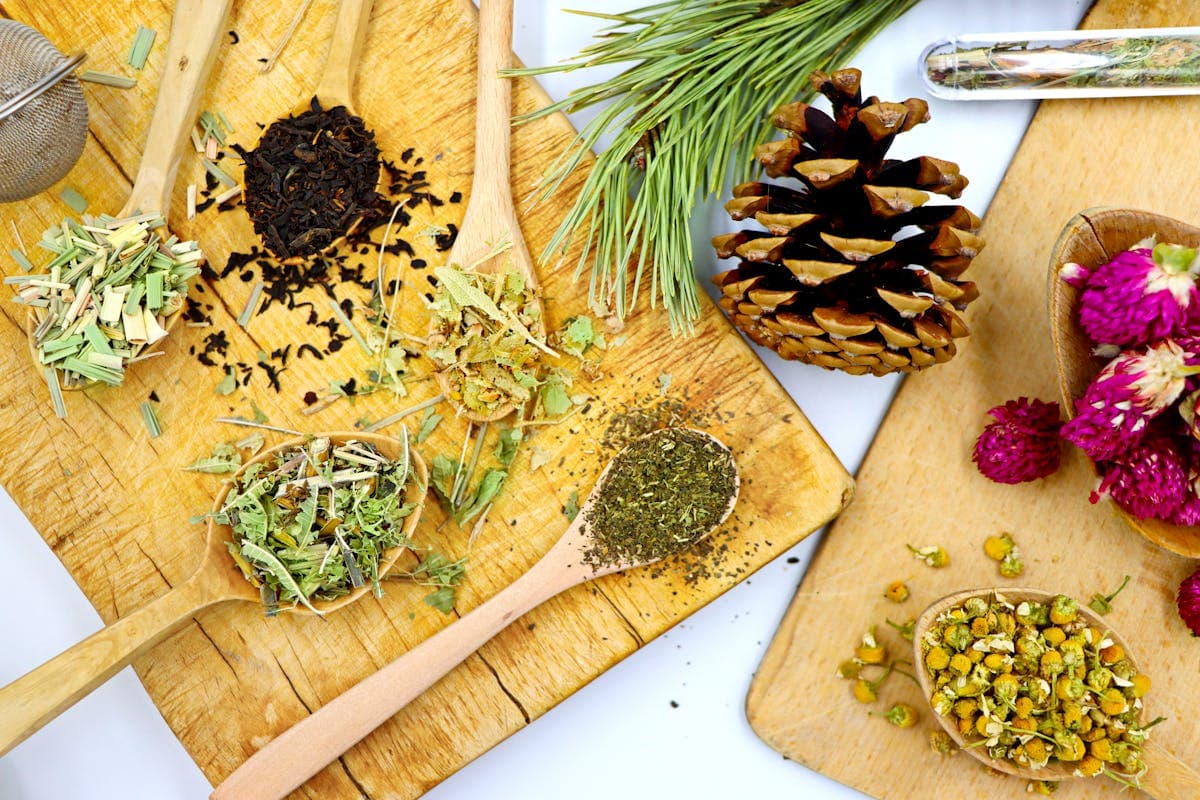
Pelargonium and Herbal Syrups for Respiratory Infections
Autumn brings with it a familiar ritual: the first chills, a scratchy throat, and a trip to the pharmacy past a wall of colourful syrups. Products with pelargonium, thyme, marshmallow root and ivy are taking up more and more shelf space — and more and more of our spending. But do these preparations genuinely help, or are we mostly buying beautifully packaged hope?
This article is not meant to put you off herbal remedies. Quite the opposite — we want to show you which ingredients have solid research behind them, how to use them sensibly, and when herbs should give way to a doctor. Because the difference between "may help" and "will definitely cure" is crucial, especially when it comes to children and older adults. The over-the-counter (OTC) supplement market is growing at double-digit rates and advertisements promise miracles — all the more reason we need reliable information to make informed purchasing and health decisions.
We will look at four of the most popular names on pharmacy shelves: African pelargonium (Pelargonium sidoides), thyme extract, marshmallow root (Althaea officinalis), and common ivy (Hedera helix). Each has a different story, different scientific evidence, and different practical uses.
African Pelargonium (Pelargonium sidoides) — a well-established star
Of all the herbal ingredients in respiratory infection syrups, African pelargonium — and specifically the extract EPs 7630 — has the most extensive body of research. This is not a random plant from folk medicine. Pelargonium sidoides originates from southern Africa, where local communities used it for centuries. It arrived in Europe in the 19th century and has been the subject of intensive clinical study since the 1990s.
What does the research say about EPs 7630?
Meta-analyses published in the Cochrane Database indicate that EPs 7630 extract may shorten the duration of acute bronchitis and ease symptoms of acute upper respiratory tract infections in adults. In several randomised controlled trials, participants taking EPs 7630 recovered 1–3 days faster than the placebo group. One of the larger studies, published in Phytomedicine, enrolled more than 400 adults and demonstrated a statistically significant reduction in the duration of acute upper respiratory tract infections. It is worth noting that the quality of evidence varies — some studies were funded by product manufacturers, which should be taken into account when interpreting results.
The mechanism of action is multi-directional: pelargonium shows antiviral properties (it inhibits viral attachment to epithelial cells), mild antibacterial activity, and immunomodulatory effects (stimulating interferon production and NK cell activity). Importantly, it does not act like an antibiotic — it does not "kill" bacteria but rather supports the body's natural defences, meaning its use does not carry a risk of antibiotic resistance or disruption of gut microbiota.
Key note regarding children: Most well-designed studies involved adults or children aged 6 and above. Data for younger children are limited, and some pelargonium preparations contain alcohol as an excipient — check the ingredient list before buying for a young child. Always consult a paediatrician or pharmacist.
Forms available in pharmacies
- Oral drops — best standardisation of EPs 7630 concentration, fast absorption
- Tablets and lozenges — convenient, alcohol-free, suitable for older children and adults
- Syrups — a popular choice, but watch for sugar content and possible alcohol
Dosage: follow the instructions for the specific product. For adults, the standard is typically three times daily for 7–10 days. Do not use for longer than recommended without medical advice.
Thyme — a herb with tradition and solid data
Thymus vulgaris is one of the best-studied herbs for coughs — and one of the most underrated, because we tend to associate it with cooking rather than the medicine cabinet. Unfairly so.
How does thyme work for coughs?
Thyme essential oil, particularly thymol and carvacrol, has bronchospasmolytic effects (eases breathing), mucolytic properties (thins secretions), and mild antimicrobial activity. Clinical studies on combinations of thyme extract with ivy (or thyme with marshmallow root) show efficacy comparable to some synthetic mucolytic drugs in the treatment of acute bronchitis.
In a study of more than 3,000 patients with acute bronchitis, thyme-and-ivy syrup proved as effective as acetylcysteine — with a better tolerability profile. That is a meaningful result.
How much does your basket cost?
See how much your basket costs across pharmacies — free, no registration
Compare pricesWho benefits from thyme?
- Wet, productive cough — thyme works best here, helping to clear retained secretions
- Dry, irritating cough — a combination with marshmallow root or liquorice works better
- Children over 1 year of age — many thyme preparations are approved for children, but always check the indications of the specific product
Note: People with allergies to plants in the Lamiaceae family (such as mint, lemon balm or lavender) should exercise caution with thyme preparations.
Marshmallow root — protection for an irritated throat
Althaea officinalis works differently from pelargonium or thyme. Its primary mechanism is not action against viruses or bacteria but mechanical protection of mucous membranes. The plant mucilage contained in marshmallow root forms a protective coating on the mucous membranes of the throat and bronchi, soothing irritation and reducing the cough reflex.
Marshmallow root — when is it most helpful?
- Dry, irritating, barking cough — especially at night, when it interferes with sleep
- Sore and irritated throat after a viral upper respiratory tract infection
- As a complement to expectorant preparations for mixed coughs
- Children — marshmallow root is one of the few herbs with a good safety profile in young children; many paediatric cough syrups contain marshmallow root extract
Clinical evidence for marshmallow root is weaker than for pelargonium or thyme — we mainly have in vitro studies and small observational trials. However, the mechanism of action is well understood from a physicochemical perspective, its safety profile is very good, and tolerance in children is high. It is also worth knowing that marshmallow root is exceptionally rich in mucilage — its root contains up to 35% mucilaginous polysaccharides, making it one of the most effective botanical agents for protecting mucous membranes. That is why marshmallow root appears in many paediatric recommendations and EMA botanical monographs as a sensible, safe choice for dry coughs.
Common ivy — a mucolytic ally with a caveat
Hedera helix, or common ivy, is an ingredient in many popular over-the-counter cough syrups. The triterpenoid saponins in ivy leaves — primarily hederacoside C and alpha-hederin — act as expectorants: they thin bronchial secretions, make them easier to cough up, and simultaneously relax the smooth muscle of the bronchi, supporting easier breathing during an infection.
Research on ivy
Meta-analyses of ivy leaf preparations indicate their efficacy in symptomatic treatment of acute bronchitis and productive cough. A large prospective observational study covering more than 10,000 children and adults with acute bronchitis showed improvement in over 90% of participants using ivy syrup — although observational studies have obvious methodological limitations. The combination of ivy with thyme is one of the better-studied phytotherapeutic combinations in pulmonology and holds an EMA monograph confirming the rationale for its use.
Important note for parents: Common ivy is a toxic plant in its raw form, and its raw leaves and berries are poisonous. Pharmacy preparations contain standardised extracts at safe concentrations; however, European regulatory agencies (including the EMA) recommend caution when using them in children under 2 years of age. Some ivy preparations are approved from 1 year of age — always read the leaflet or ask a pharmacist.
Overview: which ingredient for which type of cough?
Cough is not homogeneous — wet (productive) cough follows different rules from dry (non-productive) cough. Choosing the wrong preparation can even worsen symptoms:
- Wet, productive cough → thyme, ivy (both mucolytic/expectorant); avoid cough suppressants that block the cough reflex
- Dry, irritating cough → marshmallow root (coating the mucosa), optionally combinations with liquorice; pelargonium as an accompanying immunostimulant
- Acute upper respiratory tract infection with general malaise → pelargonium (EPs 7630) has the strongest clinical support here for adults
- Bronchitis → thyme + ivy or thyme + marshmallow root have good evidence
Realistic expectations — what herbs can and cannot do
Herbal preparations for cough and respiratory infections do work — but they do not work like antibiotics and do not "kill" viruses within a day. Here is an honest overview of what to expect:
- They may shorten the duration of an infection by 1–3 days (pelargonium, thyme) — less than advertising promises, but real and worthwhile; for a viral infection lasting 7–10 days, cutting it by 2 days means 20–28% less illness
- They may ease the severity of symptoms — less coughing, less throat pain, better sleep quality, which directly translates to your ability to work and function day to day
- They do not replace rest, hydration and symptomatic treatment (paracetamol for fever, air humidification, saline inhalations)
- They do not treat pneumonia, bacterial tonsillitis or sinus infections requiring antibiotics — this is the absolute minimum of knowledge that anyone reaching for self-treatment should have
- They do not act faster than 48–72 hours — if you expect an effect after a single dose, you will be disappointed; immunomodulation and mucolytic action need time
- Different preparations may contain the same ingredients at different concentrations — the cheapest thyme product can be just as effective as a more expensive equivalent if it contains the same standardised extract
When must you see a doctor?
Herbal syrups are a solution for mild, uncomplicated infections. Seek medical attention when:
- A fever above 38.5 °C (101 °F) persists for more than 3 days, or exceeds 39.5 °C (103 °F)
- Shortness of breath, wheezing or chest pain occurs
- A cough lasts longer than 3 weeks, or blood appears in coughed-up secretions
- Symptoms worsen after an initial improvement (this may indicate a secondary bacterial infection)
- A child is under 3 months of age — any cough at all
- A child is not eating or drinking, is lethargic, or has difficulty breathing
Frequently asked questions
Can you take a pelargonium syrup and a thyme syrup at the same time?
There are no formal contraindications to this combination, but there is also no evidence that combining them produces an additive effect. Rather than buying two products, it is worth choosing one well-studied one and using it according to the dosage instructions — that is both safer and cheaper. If you are unsure, ask the pharmacist.
Herbal syrup or a synthetic mucolytic — which is better?
The answer depends on context. For mild acute bronchitis in a healthy adult, thyme-and-ivy preparations have comparable efficacy to acetylcysteine or ambroxol, with a better tolerability profile. For a severe cough with thick secretions, synthetic mucolytics may act faster and more powerfully. There is no single answer for everyone — it is worth discussing with a pharmacist.
How long should you use herbal syrups?
Most preparations are intended for 7–14 days of use. Pelargonium is typically 7–10 days; thyme and ivy — up to 14 days. Do not extend the course without medical advice. If there is no improvement after 7 days, that is a signal to see a doctor, not to continue self-treatment.
Are herbal syrups safe during pregnancy?
For pregnant and breastfeeding women, most herbal preparations are either contraindicated or recommended with caution — this applies to pelargonium, thyme in high doses and ivy too. Herbal extracts are biologically active substances. Always consult your doctor before taking any herbal preparation during pregnancy.
Why does the same syrup cost different amounts at different pharmacies?
over-the-counter herbal preparations do not have regulated prices (unlike reimbursed prescription medicines) — each pharmacy sets its own price. The difference on an identical product can be 20–40%, and for a family with children using these preparations regularly, that adds up to a real sum. Comparing prices before you buy makes financial sense.
Can children use pelargonium syrups?
It depends on the preparation and the child's age. Some EPs 7630 products are approved from 1 or 6 years of age — check the indications for the specific product. The main safety considerations are the alcohol content in drops (not suitable for young children) and limited clinical data below age 6. A paediatrician or pharmacist can help you choose the right preparation.
Summary
Pelargonium (EPs 7630) has the strongest clinical evidence of the herbs discussed here — it shortens the duration of acute upper respiratory tract infections in adults and is well tolerated.
Thyme and ivy act as expectorants — they are particularly valuable for wet coughs and acute bronchitis; research compares them favourably with synthetic mucolytics.
Marshmallow root protects and soothes mucous membranes — ideal for dry coughs and throat irritation; it has a good safety profile even in young children.
Choosing the right preparation should match the type of cough — wet versus dry are two different problems requiring different solutions; the wrong choice can slow recovery.
Expectations should be realistic — herbs may shorten illness by 1–3 days and ease symptoms, but they do not replace rest and do not work like antibiotics.
Children are a separate category — age, alcohol content in the preparation and the manufacturer's indications all matter; when in doubt, always ask a paediatrician or pharmacist.
Prices for the same herbal preparations vary between pharmacies — comparing before you buy, especially when stocking up for the season, can bring real savings.
Disclaimer
This article is purely educational and informational in nature. It does not constitute medical advice and does not replace consultation with a doctor or pharmacist. Always consult a specialist before starting, changing or stopping any treatment — especially for children, pregnant women and people taking other medicines.
Stocking up your medicine cabinet for the infection season? A pelargonium syrup, a thyme preparation for the children, marshmallow root for that night-time cough — a few items that quickly add up in cost. On CheaperForDrug you can put the whole basket of these preparations together and compare the total price across various online pharmacies in a single click. Because real savings come from comparing the whole basket, not a single pack.