Preschooler Immunity: How to Reduce Infections This Autumn
September. The first weeks of preschool, the first runny noses. Then more. And more still. Parents come home from the pharmacy with a bag full of syrups, "immunity" supplements, and preparations containing echinacea, elderberry, and beta-glucan. They spend a significant amount every month and keep asking themselves one question: why isn't it working?
The answer is simple, even if hard to accept: a preschooler who gets sick 6–10 times a year is a healthy preschooler. A young child's immune system is still in training. Every infection is a lesson, not a malfunction. No supplement will change that — but a few straightforward habits can mean fewer illnesses and faster recoveries.
This article is an honest look at what genuinely works, what is pure marketing myth, and when frequent illness actually warrants a visit to a doctor or paediatric immunologist.
Why do preschoolers get sick so often?
The human immune system has two parts: innate immunity (a fast, non-specific response to any pathogen) and adaptive immunity (precise, targeted at specific viruses and bacteria). The second part develops throughout childhood — and the only way to build it up is through exposure to pathogens.
When a child starts preschool, they encounter dozens of new viruses from dozens of other children for the first time. During the first one to two years of attending, the rate of infections is at its highest — then it drops noticeably, because the immune system has "memorised" most of the circulating viruses.
When is it still within the normal range?
- 6–10 upper respiratory tract infections per year in children aged 2–5 — normal
- Infections lasting 7–14 days with a runny nose, cough, and possibly fever — normal
- Several infections in a row in autumn and winter, with short breaks in between — normal
- A child who gets sick more at preschool than at home — normal
When should you pay closer attention?
- More than 12 infections per year, each requiring antibiotics
- Pneumonia, abscesses, or recurrent middle ear infections (more than 4 per year)
- Bacterial infections with an unusual course, or caused by rare micro-organisms
- Failure to gain weight, or persistent diarrhoea
- Siblings or parents with similar patterns of illness
The above signs do not automatically point to an immune deficiency — but they are a reason to consult a paediatrician or paediatric immunologist.
What genuinely strengthens a preschooler's immunity
1. Sleep — the immunological foundation
This is not a metaphor: during sleep the body produces cytokines — proteins that coordinate the immune response. Children aged 3–5 need 10–13 hours of sleep per day (including naps). Research consistently shows that children sleeping fewer than 10 hours get sick more often and stay sick longer.
In practice this means a consistent bedtime (ideally between 19:30 and 20:30), a darkened room, and screens switched off at least an hour before bed. This is the cheapest and most effective "immune supplement" available without a prescription.
2. Vitamin D — the only supplement with strong evidence in children
Vitamin D is not just about bones. Vitamin D receptors are found on T and B lymphocytes, macrophages, and NK cells — the key components of the immune system. Vitamin D deficiency is extremely common across northern Europe: it is estimated to affect the vast majority of preschool and school-age children during the autumn and winter months.
Recommended dosage (based on current paediatric guidelines):
- Children aged 1–10: 600–1000 IU per day year-round (if sun exposure is insufficient)
- Supplementation from September through April is advisable regardless of diet
- Forms: oil drops (best bioavailability), lozenges, gummies — all effective when used consistently
- Vitamin D3 (cholecalciferol) is the preferred form; D2 is less well absorbed
It is worth bearing in mind that vitamin D can be overdosed. Before giving doses above 2000 IU per day to young children, consult a paediatrician and check the 25(OH)D blood level.
3. A diet rich in vegetables, fruit, and probiotics
A child's immune system largely "lives" in the gut — around 70% of immune cells are located in the gut-associated lymphoid tissue. The quality of the gut microbiome therefore directly affects the strength of the immune response.
What to include in a preschooler's diet:
- Vegetables and fruit of many colours — rich in vitamins C, A, and E, as well as polyphenols that act as antioxidants
- Natural yoghurt, kefir, buttermilk — natural probiotics without unnecessary additives
- Wholegrain cereals — fibre as food for beneficial gut bacteria (a prebiotic)
- Oily fish (salmon, mackerel, sardines) — omega-3 fatty acids and vitamin D in natural form
- Zinc — found in meat, pumpkin seeds, and legumes; zinc deficiency weakens the immune response
Probiotic supplements (preparations containing Lactobacillus rhamnosus GG or Lactobacillus reuteri) have moderate but real evidence for shortening the duration of respiratory infections in children. They are safe — worth considering especially after a course of antibiotics.
It is also worth thinking about what to avoid: a diet high in simple sugars and heavily processed foods encourages inflammation and negatively affects the diversity of the gut microbiome. Sugary drinks, sweets, and crisps do not just fail to support immunity — they actively undermine it. That does not mean a preschooler can never have a birthday biscuit, but everyday eating should be based on foods that are as minimally processed as possible.
How much does your basket cost?
See how much your basket costs across pharmacies — free, no registration
Compare prices4. Handwashing — a simple intervention with proven effectiveness
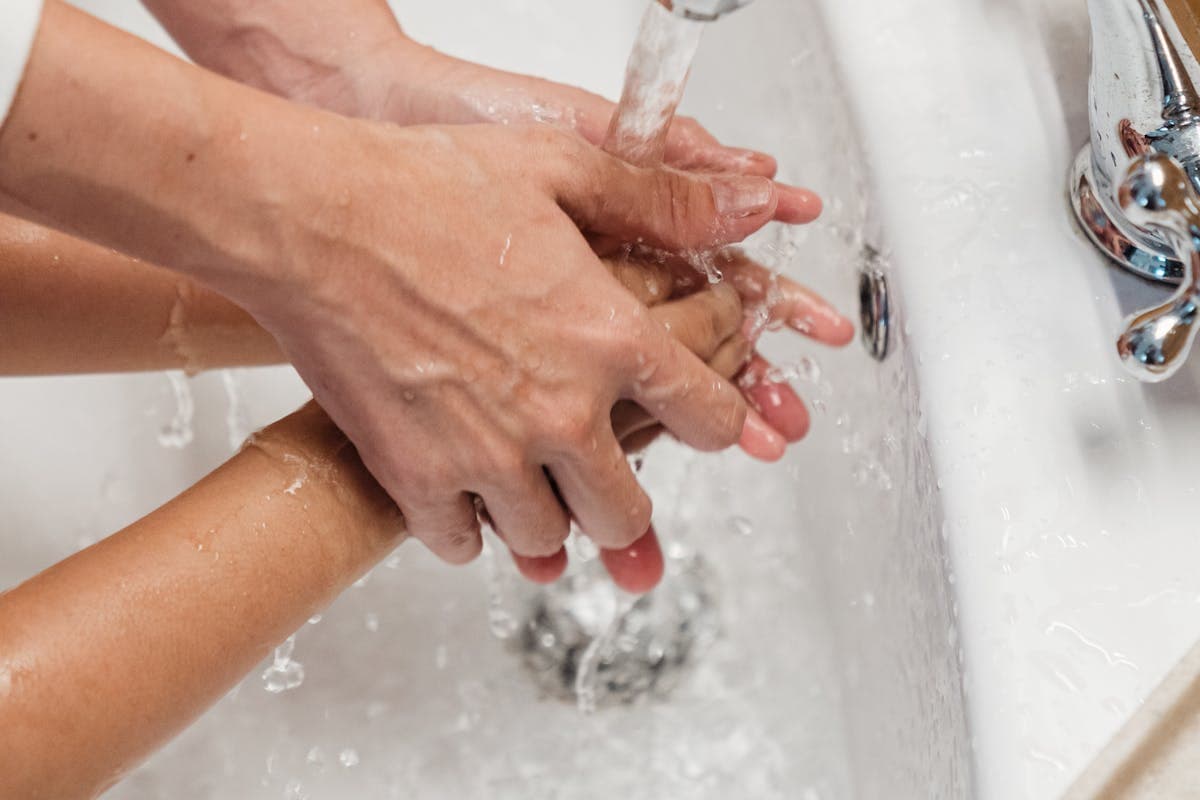
It sounds obvious, but meta-analyses consistently confirm it: regular handwashing with soap and water reduces respiratory infections in children by 16–23%, and gastrointestinal infections by as much as 40%. That is more than most "immunity" supplements deliver.
The key is teaching the child the technique: at least 20 seconds, soap over the whole hand, between the fingers and under the nails. The critical moments: after coming home from preschool, before eating, and after using the toilet. Alcohol-based hand sanitisers are a good complement when you are out and about.
5. Exercise and fresh air
Moderate physical activity has an immune-stimulating effect — it increases NK cell activity and improves lymphatic circulation. This is not about competitive sport, but about a daily outing — even with a mild runny nose, if the child has energy and no fever.
The myth that "catching cold makes you ill" is remarkably persistent. Air temperature alone does not cause infection — viruses do. Children confined to overheated, poorly ventilated rooms are at greater risk of infection than those playing outside on a chilly day. The optimal temperature in a child's bedroom is 18–20°C (64–68°F) with humidity between 40–60%; air that is too dry dries out the mucous membranes of the nose and throat, which are the first barrier against viruses.
6. Avoiding tobacco smoke and air pollution
Passive exposure to tobacco smoke is one of the best-documented risk factors for recurrent respiratory infections in children. Cigarette smoke damages the cilia of the respiratory epithelium, which normally trap and remove pathogens. Children of parents who smoke indoors get middle ear infections and bronchitis on average twice as often. The same applies to air pollution — during the heating season, when air quality indices exceed safe limits, it is worth limiting long walks near busy roads and considering an air purifier in the child's bedroom.
Supplements marketed for immunity — what does the research say?
Pharmacy shelves carry dozens of preparations advertised as immune support for children. It is worth knowing what current scientific literature actually says about them.
Echinacea
Research results are inconsistent. Meta-analyses suggest a possible shortening of cold duration by one to one and a half days in adults. In children under 12 the evidence is weaker, and some preparations have triggered allergic reactions. Safe for short-term use, but there is no strong case for giving it preventively throughout an entire season.
Beta-glucan
Promising results in several studies, particularly beta-glucan from yeast (Saccharomyces cerevisiae). The mechanism involves activation of macrophages and NK cells. The evidence is not yet sufficient for inclusion in official guidelines, but the safety profile is good.
Black elderberry (Sambucus nigra)
Studies show potential antiviral activity in vitro and possible shortening of flu duration, but the methodology of many clinical trials is weak. Elderberry syrups are safe, but the marketing claims run well ahead of the scientific evidence.
Vitamin C
Does not prevent colds in the general population. May slightly shorten their duration (by roughly 8–14%). Supplementing with high doses of vitamin C in children who eat vegetables and fruit is generally unnecessary — any excess is simply excreted.
Garlic, propolis, acerola
Popular, but there is a lack of robust randomised trials in children. Propolis may act locally (throat spray), garlic has documented antibacterial properties, but as an oral supplement the evidence is weak.
The takeaway: no supplement replaces sleep, exercise, diet, and hygiene. Preparations can complement these foundations, not replace them.
When do frequent infections require a doctor or immunologist?
Primary immune deficiencies (PIDs) are a rare but serious group of conditions. Most preschoolers who get sick frequently are simply healthy children building immunity — but there are signals that warrant acting sooner.
Red flags — consult a doctor if you see:
- Four or more middle ear infections within a year
- Two or more serious sinus infections within a year
- Two or more episodes of pneumonia within a year
- Recurrent skin or internal abscesses
- Recurrent infections requiring intravenous antibiotics
- Infections caused by micro-organisms that do not normally cause illness in healthy children
- Poor weight gain or growth
- Immune system conditions in the family
Basic work-up includes a full blood count with differential, immunoglobulin levels (IgG, IgA, IgM), and a vitamin D level. A paediatrician can order these tests without a referral to an immunologist. If results are abnormal, a referral to an immunology clinic follows.
Frequently asked questions
Is it worth enrolling a child in nursery earlier to "build up" immunity?
It is a popular strategy and not without logic — early contact with other children does genuinely accelerate the development of adaptive immunity. However, the decision to start nursery should come from the family's needs, not from an immunological calculation. A three-year-old starting preschool will go through the same "immune system training" stage — a little later, but just as effectively.
Should a child get antibiotics after every infection?
Absolutely not. Around 80–90% of upper respiratory tract infections in children are viral, and antibiotics have no effect on them. Antibiotic treatment without clear indication destroys the gut microbiome, increases the risk of bacterial resistance, and can paradoxically weaken long-term immunity. Antibiotics are appropriate when a bacterial infection is confirmed or highly likely — the decision is always a doctor's.
How much vitamin D should children take in autumn and winter?
For children aged 1–10, the standard preventive dose is 600–1000 IU per day. It is worth adjusting the dose to the 25(OH)D blood result — the target level is 30–50 ng/ml. Oil-based drops are the best absorbed and easiest to dose. Vitamin D is best given with a meal that contains some fat.
Do vaccinations help with general immunity?
Yes, although the mechanism is different from what most parents think. Vaccinations do not "train" general immunity — they teach the immune system to recognise specific pathogens. Nevertheless, epidemiological studies indicate that regularly vaccinated children (including MMR and seasonal flu vaccines) get fewer "neighbouring" infections, thanks to the phenomenon of trained innate immunity. Annual flu vaccination significantly reduces the number of infections and complications in preschoolers.
Can echinacea supplements be given throughout the whole season?
Most guidelines recommend using echinacea in courses (for example 2–3 weeks on, then a 1–2 week break), not continuously throughout the entire season. Prolonged continuous use may paradoxically suppress the immune response. Before giving echinacea to a child under 2, it is worth consulting a paediatrician.
When can a child with a runny nose return to preschool?
Most settings ask that the child has been fever-free for 24–48 hours. A runny nose on its own (clear or yellow discharge) is not an absolute contraindication — yellow discharge does not automatically indicate a bacterial infection requiring isolation. What matters is that the child has energy to play and does not have symptoms requiring medical supervision.
Summary
✅ A preschooler who gets sick 6–10 times a year is a healthy child building immunity — not a patient who needs supplementing.
✅ Vitamin D3 at 600–1000 IU per day from September through April is the only supplement with strong evidence in young children in northern climates.
✅ 10–13 hours of sleep, daily outdoor activity, and a diet rich in vegetables, fruit, and fermented dairy products do more than a dozen supplements combined.
✅ Handwashing for 20 seconds with soap — especially after preschool and before eating — reduces infections by around 20%.
✅ Echinacea, beta-glucan, and elderberry supplements can complement a good diet, but they cannot replace the fundamentals: sleep, movement, and food.
✅ Red flags (more than 4 ear infections per year, pneumonia, abscesses, poor weight gain) call for a paediatric review — not another round of supplements.
✅ Antibiotics for a viral cold do not speed up recovery — and can damage the gut microbiome, which is the foundation of immunity.
Disclaimer
This article is for educational and informational purposes only. It does not replace consultation with a paediatrician or pharmacist. All decisions regarding supplementation, dosing, and treatment should be made in discussion with the child's doctor. If you have any concerns about your child's health, consult a specialist.
If autumn is the time when you routinely stock up on vitamin D, probiotics, and immune-support preparations for the whole family, it is worth checking how much you are actually paying for that entire basket of supplements. Prices for the same products can differ by as much as 30–50% between pharmacies — and real savings come from comparing the whole basket, not a single pack at a time. CheaperForDrug compares your total across 100+ pharmacies at once, so you pay less for what you were going to buy anyway this season.