Strep Throat vs Viral Sore Throat: How to Tell the Difference
A sore throat can come out of nowhere. You wake up feeling like you’re swallowing razor blades, you have a fever, and you feel knocked flat. Your first thought: “Probably strep — I need an antibiotic.” But do you? Statistics show that more than 80% of sore throats in adults have a viral cause — and viruses don’t respond to antibiotics. On the other hand, genuine strep throat caused by Streptococcus pyogenes (Group A beta-haemolytic streptococcus), left untreated, can lead to serious complications.
The challenge is that viral pharyngitis and strep throat can look almost identical at first glance. Both hurt, both can cause fever, and both make swallowing miserable. The key differences — once you know what to look for — are, however, recognisable.
In this article we’ll walk you through the most important criteria for telling them apart, explain what the Centor criteria and rapid strep test are, cover when you genuinely need a doctor and a prescription, and when over-the-counter (OTC) remedies that actually work will do the job. And at the end — a word on the complications you really want to avoid.
Viral Sore Throat — What Sets It Apart
The vast majority of sore throats are viral infections. The most common culprits are rhinoviruses, adenoviruses, influenza and parainfluenza viruses, and during autumn and winter, the coronaviruses that cause common colds. A viral infection typically affects multiple parts of the upper respiratory tract at the same time.
Typical features of a viral sore throat
- Runny nose or nasal congestion — the presence of a runny nose is one of the strongest signals pointing to a viral infection. With strep throat, a runny nose is virtually absent.
- Cough — dry or with mucus; another feature far more common with viruses than with strep.
- Hoarseness — laryngitis often accompanies viral upper respiratory infections.
- Gradual onset — symptoms build over one to two days rather than striking suddenly.
- Mild fever or no fever at all — viruses can cause high temperature, but often the fever is low-grade or absent.
- Reddened tonsils without obvious white patches — the throat looks inflamed, but there are usually no pus-covered areas.
A viral sore throat resolves on its own within five to seven days. Antibiotics do not shorten the illness, reduce symptoms, or prevent complications in viral infections — they do, however, disrupt the gut microbiome and drive antibiotic resistance.
Strep Throat — Symptoms That Should Raise Suspicion
Strep throat is a bacterial infection of the tonsils, most commonly caused by Group A beta-haemolytic streptococcus (Streptococcus pyogenes). It has a fairly characteristic clinical picture — though the appearance of the throat alone is never enough for a definitive diagnosis.
Typical features of strep throat
- Sudden, severe sore throat — comes on rapidly, often within a few hours, and can be very intense.
- High fever — typically above 38–38.5°C (100.4–101.3°F), often exceeding 39°C (102.2°F).
- White or yellowish coating on the tonsils — visible pus patches or a membrane covering the tonsils is an important clue.
- Tender, swollen lymph nodes under the jaw — enlarged and painful anterior cervical lymph nodes are one of the classic signs.
- No runny nose, no cough — this is the key distinguishing signal from a viral infection.
- General malaise, headache, body aches — typical systemic symptoms accompanying strep throat.
Important: a white coating on the tonsils does not automatically mean strep throat — viruses (such as the Epstein-Barr virus causing infectious mononucleosis) can produce a similar appearance. That is why “looking at the tonsils” alone — even by a clinician — has limited diagnostic value without additional tools.
The Centor Criteria — A Simple Scoring System
Clinicians have long used the Centor criteria (and their modification, the McIsaac criteria) to estimate the clinical likelihood of strep throat. It is a simple scoring system based on four key features.
The four Centor criteria
- Tonsillar exudate or swelling — 1 point
- Tender, swollen anterior cervical lymph nodes — 1 point
- History of fever or measured fever — 1 point
- Absence of cough — 1 point
The McIsaac modification adds points for age (5–14 years: +1 point; over 45 years: −1 point).
How to interpret the score
- 0–1 point — very low probability of strep throat; antibiotics are not recommended.
- 2–3 points — moderate probability; a rapid strep test or throat culture is advisable.
- 4 points or more — high probability; treatment should be considered, ideally after confirmation with a test.
The Centor criteria are a screening tool, not an oracle — but they help both clinicians and patients understand why not every sore throat with fever calls for an immediate antibiotic.
The Rapid Strep Test — What Is It and Is It Worth Doing?
The rapid antigen detection test for Group A streptococcus (RADT) is a simple test performed with a throat swab. Results are available within minutes — exactly like a pregnancy test or a rapid flu test.
Advantages of the rapid strep test
- High specificity — a positive result almost certainly confirms a strep infection and justifies prescribing an antibiotic.
- Avoids unnecessary antibiotics — a negative result combined with a low Centor score allows for a more confident decision to hold off on antibiotic therapy.
- Speed — a treatment decision on the same day.
The test is performed by a doctor or nurse, and many clinics offer it on site — it is worth asking for one if you are uncertain. A positive result is not an automatic “ticket” to antibiotics — it is interpreted alongside the full clinical picture.
How much does your basket cost?
See how much your basket costs across pharmacies — free, no registration
Compare pricesImportant: even if you suspect strep throat, do not try to obtain antibiotics without a prescription. In most countries, antibiotics are prescription-only medicines — and for good reason. Self-medicating with antibiotics risks complications, drug interactions, and contributes to the global problem of antibiotic resistance.
Strep Throat Needs an Antibiotic — but a Doctor Must Prescribe It
If a rapid test or the clinical picture confirms strep throat, a doctor will prescribe an antibiotic. The standard course is penicillin or amoxicillin for 10 days — cutting the course short to five or seven days increases the risk of incomplete eradication and relapse. For people with penicillin allergy, macrolides or cephalosporins are used instead.
Why finishing the full course matters
This is a point many patients overlook. After two or three days on an antibiotic the fever drops and the pain fades, and the temptation to stop taking the tablets is real. That is a mistake — the streptococcus may not be fully eliminated, and the risk of complications remains.
Antibiotics for strep throat serve two purposes: shortening the duration of illness and — more importantly — preventing the serious complications described later in this article.
Over-the-Counter Relief for a Sore Throat — What You Can Do Yourself
Whether you have a viral sore throat or are waiting for a medical appointment after suspecting strep, a range of over-the-counter products can genuinely ease your discomfort and improve how you feel.
Topical sore-throat products
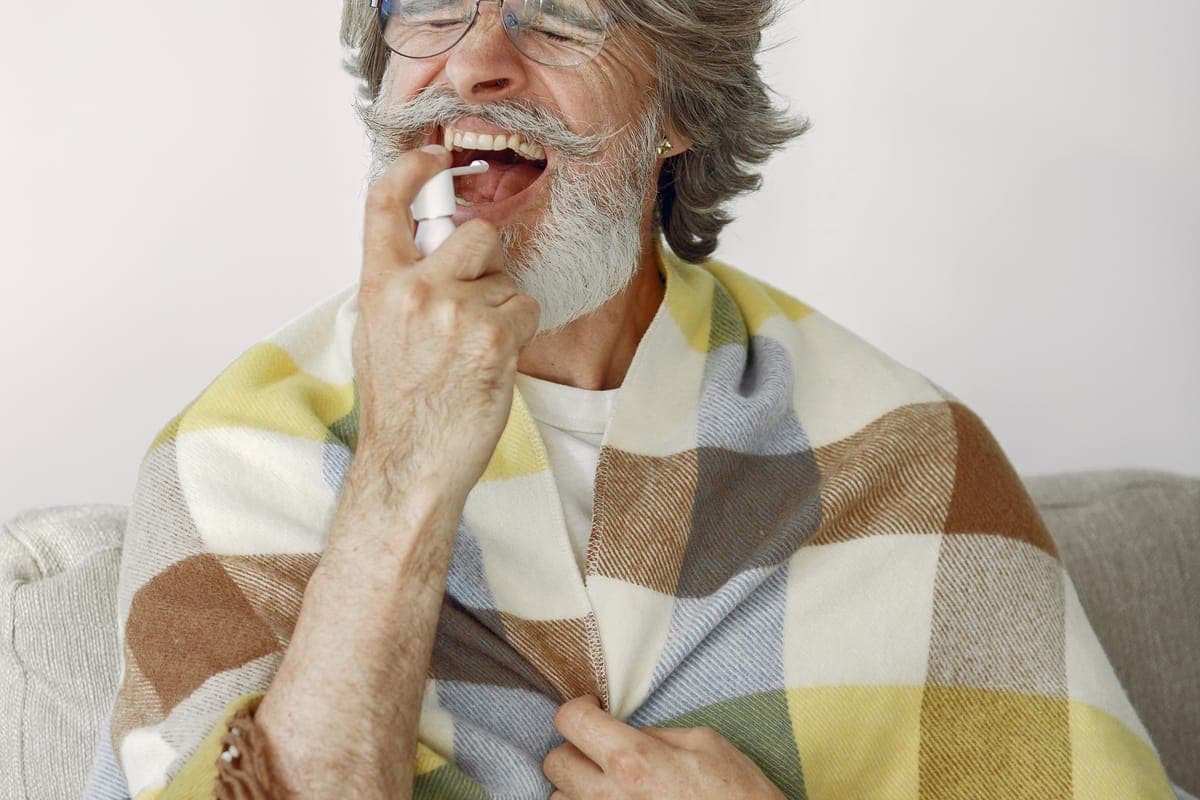
- Throat sprays and aerosols — contain local anaesthetics (such as lidocaine or benzydamine) or antiseptics (chlorhexidine, dichlorobenzyl alcohol). Applied directly to the tonsils and back of the throat, they relieve pain on swallowing.
- Lozenges — a convenient format with similar active ingredients; slower release provides sustained local relief. Some contain benzydamine with anti-inflammatory properties; others feature herbal extracts (sage, thyme, marshmallow root).
- Throat gargles — solutions with chlorhexidine, povidone-iodine, or herbal extracts; they help maintain local hygiene and have a soothing effect. Use three to four times a day.
Systemic pain relief and fever management
- Ibuprofen — anti-inflammatory, analgesic, and antipyretic; can be a first choice for strong pain with fever in adults (in the absence of contraindications to NSAIDs).
- Paracetamol (acetaminophen) — a safe pain-relieving and fever-reducing option, especially when ibuprofen is contraindicated; it does not have an anti-inflammatory effect.
Dosing: always follow the package leaflet, accounting for body weight (especially in children) and any chronic health conditions. If in doubt, ask a pharmacist.
Supportive home measures
- Rest — an infection is a time for recovery; pushing through illness prolongs it.
- Hydration — drink plenty even when swallowing hurts; warm herbal teas (chamomile, sage, thyme), broth, and diluted fruit juices all work well.
- Soft, warm foods — soups, smoothies, yoghurt; avoid hard or rough-textured foods.
- Warm salt-water gargle — a simple osmotic method that can reduce swelling and discomfort.
- Steam inhalation — helpful when nasal congestion and mucous-membrane irritation accompany the sore throat.
Complications of Untreated Strep Throat
This section cannot be skipped — it explains exactly why strep throat requires treatment and not just symptomatic relief. Complications fall into two groups: early (suppurative) and late (non-suppurative).
Suppurative (early) complications
- Peritonsillar abscess — a collection of pus in the tissue surrounding the tonsil; presents with worsening pain, difficulty opening the mouth, a “hot potato” muffled voice, and general deterioration. Requires urgent treatment, often surgical drainage.
- Otitis media — streptococcus can spread via the Eustachian tube to the middle ear.
- Sinusitis — less common, but possible.
- Cervical lymphadenitis — suppurative inflammation of the neck lymph nodes may require drainage.
Non-suppurative (late) complications — the most serious
- Rheumatic fever — an autoimmune response to strep infection that can lead to permanent heart valve damage (rheumatic heart disease). In countries with limited antibiotic access it remains a significant health burden. It is uncommon in places with widespread healthcare access, but remains real when infections go untreated or recur.
- Post-streptococcal glomerulonephritis — immune-mediated inflammation of the kidney’s filtering units; presents with blood in the urine, oedema, and raised blood pressure.
- PANDAS — a paediatric neuropsychiatric syndrome associated with streptococcal infections; rare, but clinically significant in children.
That is exactly why antibiotics are taken for the full ten days — not merely to feel better faster (though that helps too), but to eliminate the streptococcus and prevent these complications.
When to Seek Medical Help Immediately
There are situations where there is no time for watchful waiting or self-treatment. Go to a doctor or to urgent care if:
- You have difficulty swallowing saliva or liquids — this can indicate a peritonsillar abscess or throat swelling that compromises your airway.
- You cannot open your mouth fully (trismus) — a classic sign of a peritonsillar abscess.
- You develop shortness of breath or stridor — a sign of threatened airway patency; this is a medical emergency, call emergency services immediately.
- Fever exceeds 40°C (104°F) or does not respond to fever-reducing medication.
- Symptoms worsen after 48–72 hours of symptomatic treatment or return suddenly after a brief improvement.
- A child refuses to drink — the risk of dehydration is real, and this is especially important in young children.
- You are immunocompromised (blood disorders, HIV, immunosuppressive therapy, poorly controlled diabetes) — in these patients infections can deteriorate rapidly.
Frequently Asked Questions
Can you diagnose strep throat yourself without seeing a doctor?
The Centor criteria let you estimate the likelihood of strep throat, but they are a screening tool only. A definitive diagnosis requires a rapid antigen test or a throat culture — both are performed by healthcare professionals. If you score 3–4 Centor points (no runny nose, no cough, fever, visible coating on tonsils), see a doctor. Self-diagnosis based on how the throat looks is unreliable even for experienced clinicians.
Is strep throat contagious?
Yes. Group A streptococcus spreads by respiratory droplets. You are most contagious before treatment and during the first 24–48 hours after starting antibiotics — after that, a person on antibiotics is no longer contagious to others. It is advisable to stay home until the fever has cleared and at least 24 hours have passed since the first antibiotic dose.
Does a child with strep throat have to see a doctor?
Yes. Strep throat is more common in children than adults (peak incidence ages 5–15), and the risk of complications without treatment is real. Do not give a child antibiotics from the home medicine cabinet, and do not wait for a severe infection to “pass on its own” — consult a paediatrician.
How long does strep throat last with antibiotics?
Fever typically falls within 24–48 hours of the first antibiotic dose. Throat pain improves noticeably after two to three days. Even so, the course must be completed in full for ten days — stopping early when symptoms resolve increases the risk of the infection returning and of complications.
What is infectious mononucleosis and why should it be distinguished from strep throat?
Infectious mononucleosis (caused by the Epstein-Barr virus) can mimic strep throat: severe sore throat, enlarged tonsils with coating, high fever, swollen lymph nodes. Key differences include: pronounced fatigue and general malaise, bilateral and posterior neck lymph node enlargement, and spleen enlargement. Crucially, taking amoxicillin (a common antibiotic for strep) during mono typically causes a characteristic rash — another reason to leave the diagnosis to a clinician.
Can herbal remedies replace antibiotics for strep throat?
No. Chamomile, sage, thyme, propolis, echinacea — these are all valuable preparations that soothe symptoms, have local anti-inflammatory effects, and support the immune system. But none of them eliminates Group A streptococcus or prevents rheumatic fever. Herbal products provide symptomatic support — they are not a substitute for antibiotics when a bacterial infection has been confirmed.
Summary
✅ Viral sore throat and strep throat are two different conditions — the former is more common, resolves on its own, and does not require antibiotics; the latter is bacterial and requires treatment.
✅ The Centor criteria (coating, lymph nodes, fever, absence of cough) help assess the likelihood of strep throat — but a definitive diagnosis requires a rapid test or throat culture.
✅ Antibiotics for strep throat are prescribed by a doctor only — self-treating with antibiotics is unsafe and in most countries illegal without a prescription.
✅ over-the-counter products (throat sprays, lozenges, ibuprofen, paracetamol) effectively relieve pain and are the right choice for a viral sore throat or as a complement to antibiotic therapy.
✅ Untreated strep throat can lead to a peritonsillar abscess, rheumatic fever, and heart valve damage — completing the full ten-day antibiotic course is essential.
✅ See a doctor immediately if you have difficulty swallowing, opening your mouth, or breathing — these can be signs of an abscess requiring urgent intervention.
✅ A runny nose and cough are signals of “probably viral” — their absence alongside high fever and a white coating on the tonsils is the signal to see a doctor.
Disclaimer
This article is for educational purposes only and does not replace consultation with a doctor or pharmacist. Diagnosing strep throat requires clinical assessment and — where indicated — a rapid antigen test. Do not use antibiotics without a prescription. If symptoms are severe, persist beyond 48–72 hours despite symptomatic treatment, or are accompanied by warning signs (difficulty swallowing, shortness of breath, high fever not responding to medication), see a doctor without delay. Before using any product, read the package leaflet and consult a pharmacist.
Once you know what you need — whether it’s a throat spray, lozenges, ibuprofen, or paracetamol — there’s no need to grab the first option at the nearest pharmacy. Add everything to a basket on CheaperForDrug and instantly compare prices across 100+ online pharmacies. Real savings come from comparing your whole basket, not just a single pack — and that holds true for sore-throat products just as much as for the rest of your medicine cabinet.