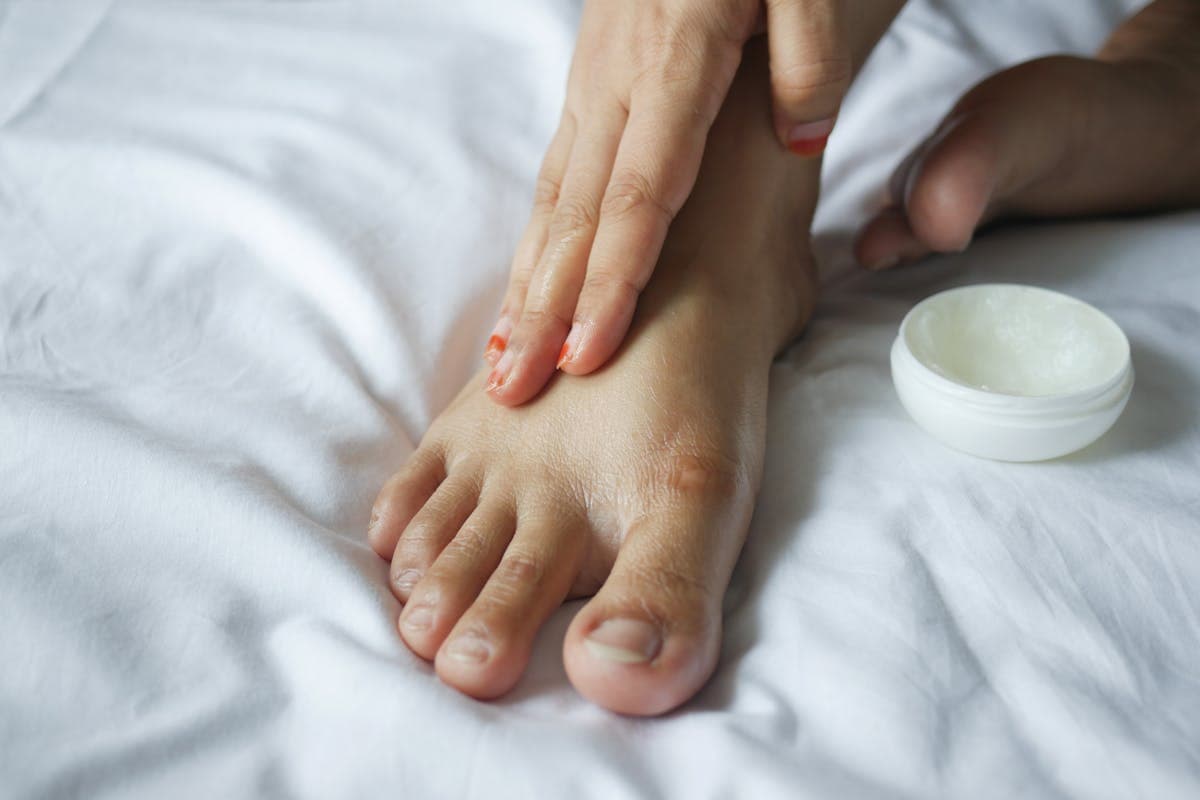
Warts and Verrucas: Over-the-Counter Pharmacy Treatments
It appears innocently enough — a small, hard lump on the sole of your foot or on a finger. Sometimes it hurts under pressure, sometimes not at all. One person says it is a corn. Another says it is a verruca. But the difference matters, because a viral wart and a corn have entirely different causes and require entirely different approaches. Reaching for the wrong product wastes your time and money — sometimes months of patient application of something that simply does not work for this problem.
Viral warts are caused by HPV (human papillomavirus) — not the strains linked to cervical cancer, but the cutaneous types that infect the outer layers of skin. The virus enters through tiny breaks in the skin, often in damp environments such as swimming pools, changing rooms, and communal showers. After infection a wart can appear weeks or even months later, because the virus can stay dormant for a long time. That is why it is not always obvious where or when you picked it up.
In this article we explain how to tell a viral wart from a corn, which over-the-counter products genuinely help, how to use them step by step, and — equally important — when self-treatment is not enough and you need to see a dermatologist.
Viral wart vs corn — how to tell them apart
Before reaching for a product, it is worth being confident about what you are dealing with. Mistakes are common because both problems affect the feet and produce hardened skin. The differences are clear once you know what to look for.
Viral wart (verruca)
- Cause: infection with cutaneous HPV strains (e.g. HPV-1, HPV-2, HPV-4).
- Appearance: a hard, rough, grainy thickening; on the sole of the foot (plantar wart) it is often pushed inward so that pain occurs mainly under pressure. On the hands and fingers it tends to protrude more.
- Key sign: when you gently pare away the surface layer you can see tiny black dots — these are clotted capillaries. This is a reliable sign of a viral wart.
- Skin ridges: a wart interrupts the fingerprint-like ridges of the skin — a corn does not.
- Pain: more pronounced when squeezed from the sides than when pressed from directly above (the opposite of a corn).
Corn (callus)
- Cause: mechanical thickening of the skin in response to pressure or friction — for example from ill-fitting footwear.
- Appearance: a hard, yellowish thickening with a firm central core; the surface is smooth, without graininess.
- No black dots: when pared down you see uniform, hardened tissue — no black dots.
- Skin ridges: a corn does not interrupt the skin ridges.
- Pain: mainly with direct pressure from above.
If after paring back the dead skin you see black dots and a disrupted skin-ridge pattern, you have a viral wart. If the surface is uniform and smooth, it is most likely a corn. When in doubt, ask a pharmacist or have a dermatologist take a look.
How does cutaneous HPV spread?
Cutaneous HPV strains are contagious and spread through direct skin-to-skin contact or via contaminated surfaces. Tiny breaks in the skin — scratches, abrasions, or skin softened by prolonged moisture — make infection easier. This is why warts are so common around swimming pools, saunas, and gym changing rooms, where the combination of moisture and heavy foot traffic creates ideal conditions.
Important: warts can spread to other parts of your own body (autoinoculation). Do not scratch or pick at warts — you can spread the infection to neighbouring skin or other fingers.
Over-the-Counter wart treatments — what the pharmacy offers
Pharmacies stock several categories of over-the-counter (OTC) product for treating viral warts. Each works slightly differently, and each requires consistent use over several weeks.
Salicylic acid and lactic acid preparations
These are the first-line over-the-counter treatment for viral warts. Salicylic acid (typically 15–26%) acts as a keratolytic agent — it breaks down the hardened skin layer by layer, gradually exposing the virus-infected tissue beneath. Lactic acid enhances this effect and also has a mild antimicrobial action.
Available forms:
- Liquids and solutions — applied with a brush directly onto the wart; precise, but care is needed to avoid irritating the healthy skin around it.
- Gels — a slightly thicker consistency that is easier to apply in a controlled way.
- Paints and lacquers — form a protective film over the wart after application.
Step-by-step application guide:
- Before applying, soak the wart in warm water for 5–10 minutes — softened skin absorbs the product better.
- Dry the skin thoroughly.
- Gently file away the white, dead surface layer with a disposable emery board or pumice stone — use it only on the wart, as it can transfer the virus.
- Apply the product precisely to the wart, avoiding the surrounding healthy skin. Protect the skin around the wart with petroleum jelly or a plaster with a hole cut to size.
- Cover the wart with a plaster or dressing.
- Repeat daily or every two days as directed by the product instructions — usually for 8–12 weeks.
Patience and regularity are the keys. A viral wart does not disappear after a few days. A full course of treatment often takes 8–16 weeks, and visible results appear gradually.
How much does your basket cost?
See how much your basket costs across pharmacies — free, no registration
Compare pricesHome cryotherapy
Home cryotherapy kits contain a mixture of dimethyl ether and propane (DMEP) which, when applied to the wart, cools it to around -57°C (-71°F). This is far less cold than the liquid nitrogen used in a dermatology clinic (-196°C / -321°F), but it can be effective for superficial warts.
The treatment works by freezing the infected skin cells — the frozen tissue dies off, and over the following days the wart darkens and either falls away or gradually shrinks. The procedure is usually repeated after 2–4 weeks.
Important guidance for home cryotherapy:
- Read the instructions carefully before use — application time varies between products.
- Do not use on the face, neck, skin folds, or genital area.
- Do not use on children below the minimum age stated on the packaging (usually 4–12 years depending on the product).
- A single treatment is often not enough — typically 2–4 applications spaced two weeks apart are needed.
- After treatment the skin may be red and sore — this is a normal reaction.
- Do not use if you have circulatory disorders, diabetes, or reduced sensation in your feet.
Medicated plasters with salicylic acid
Salicylic acid plasters (typically 40%) are a convenient alternative to liquids and gels, particularly for plantar warts. You cut the plaster to the size of the wart, apply it, and leave it in place for 24–48 hours. After removing it you peel away the softened white skin layer and apply the next plaster.
The advantage of plasters is continuous, prolonged contact of the product with the wart without the risk of it running onto healthy skin. The disadvantage — they are less precise for warts in awkward locations or with an irregular shape.
Combination products — acid plus additional ingredients
Some pharmacy products combine salicylic acid with other substances — for example lactic acid, collodion (which forms a protective film), or plant-derived antiviral ingredients. They may be somewhat more effective than salicylic acid alone, but the core mechanism of action is the same.
Warts in children — what to know
Viral warts are among the most common skin complaints in school-age children — the immune system is still learning to deal with cutaneous HPV. The good news: in children, warts often resolve on their own within 1–2 years, as the immune system eventually clears the virus.
If warts are not bothering your child and are not spreading, it is perfectly reasonable to watch and wait. If there are many of them, they are growing, or they are causing pain (for example, a plantar wart making walking difficult), it is worth trying salicylic acid preparations or consulting a paediatrician or dermatologist. Use home cryotherapy in children only within the age restrictions on the packaging — many products are not intended for children under 4 or 12 years of age.
When pharmacy products are not enough — see a dermatologist
over-the-counter treatments offer a genuine chance of clearing warts, but there are situations where self-treatment is insufficient or downright inadvisable. A dermatology consultation is mandatory or strongly recommended in the following circumstances:
- Warts on the face or neck — over-the-counter products may cause permanent marks or irritation. Professional treatment in a clinic is needed here.
- Warts in the genital area (perineum, anus, genitals) — these may be caused by different HPV strains and require separate diagnosis and treatment by a doctor.
- Diabetes and peripheral circulatory disorders — in these individuals, any treatment to the feet, including keratolytic products, carries a risk of complications. Always seek medical advice first.
- Numerous or extensive warts — a dozen or more warts, or a lesion covering a large area of skin, needs professional assessment and treatment.
- Warts that have not cleared after 12–16 weeks of over-the-counter treatment — if regular use of a product over several months shows no progress, it is time for a dermatology appointment.
- Recurrence after treatment — if warts return after apparent clearance, a dermatologist can offer more aggressive options (liquid nitrogen cryosurgery, electrocautery, laser therapy, local immunotherapy).
- Uncertainty about the diagnosis — any skin change you are not sure about should be assessed by a doctor. A wart can be confused not only with a corn but also with other lesions that require specialist diagnosis.
- Warts in people with a weakened immune system — for example, oncology patients or people taking immunosuppressants after an organ transplant — specialist dermatological care is required.
Prevention — how not to get infected (and not infect others)
Eliminating the risk of cutaneous HPV infection entirely is difficult, but a few simple habits significantly reduce it:
- Wear flip-flops at swimming pools, in saunas, and in changing rooms — this is the simplest and most effective preventive measure.
- Do not walk barefoot in public places where the floor is wet and heavily used.
- Look after the skin on your feet — dry, unbroken skin is harder to infect. Moisturise regularly and prevent irritation.
- Do not touch, scratch, or pick at warts — your own or anyone else's — as the virus spreads through contact.
- Do not share nail files, pumice stones, or towels with people who have warts.
- During active treatment cover the wart with a plaster, especially at the pool or gym.
Frequently asked questions
Do viral warts go away on their own?
Yes, often — especially in children. The immune system eventually recognises the virus and the wart can clear up by itself within 1–2 years. Spontaneous resolution is less common in adults and usually takes longer. If a wart is bothersome, painful, or spreading, it is better to start treatment rather than wait.
How long does pharmacy treatment take?
Treating warts takes time and patience. Salicylic acid products are usually applied daily for 8–16 weeks. Home cryotherapy typically requires 2–4 sessions spaced two weeks apart. Do not stop treatment when the wart "disappears on the surface" — the virus may still be present in deeper skin layers.
Can a wart spread to other parts of my body?
Yes — this is called autoinoculation. Scratching, picking, or rubbing a wart can transfer the virus to neighbouring skin areas or other fingers. During treatment it is a good idea to keep the wart covered with a plaster and avoid touching it directly.
How can I tell a wart from a corn without seeing a doctor?
The simplest method: gently rub away the outer layer with a pumice stone and examine the surface closely. Black dots (clotted capillaries) and a disrupted skin-ridge pattern point to a viral wart. Uniform, yellowish, smooth tissue without dots is a corn. When in doubt, ask a pharmacist or show the lesion to a dermatologist.
Can I use a wart treatment if I have diabetes?
Not without medical advice. People with diabetes have impaired blood flow and sensation in their feet — even minor irritation can lead to wounds that are slow to heal. Any treatment to the feet, including keratolytic acids, should first be discussed with your doctor or diabetes specialist.
Is home cryotherapy as effective as clinic treatment?
No. Home cryotherapy kits reach around -57°C (-71°F), whereas liquid nitrogen in a dermatology clinic reaches -196°C (-321°F). Professional cryosurgery is more effective, particularly for deeper or treatment-resistant warts. Home cryotherapy is a convenient option for small, superficial lesions — but it cannot replace clinical treatment in difficult cases.
Summary
✅ A viral wart is a cutaneous HPV infection, not a corn — black dots and interrupted skin ridges after paring back the dead skin are a reliable sign of a wart. An accurate diagnosis is the first step to effective treatment.
✅ Salicylic acid (and lactic acid) is the first-line over-the-counter treatment — products in the form of liquids, gels, and plasters should be used regularly for 8–16 weeks. Without patience there will be no result.
✅ Home cryotherapy works, but is weaker than clinic treatment — it is suitable for superficial, single warts; follow the instructions, do not use in children below the stated age limit, and avoid it if you have diabetes or circulatory problems.
✅ Prevention means flip-flops and dry feet — swimming pools, saunas, and changing rooms are the main sources of infection; cover the wart during treatment and do not share files or towels.
✅ See a dermatologist for warts on the face, in the genital area, when you have diabetes, for multiple lesions, and after recurrence following over-the-counter treatment.
✅ In children, warts often resolve on their own — if they are not causing any trouble, watchful waiting is reasonable; start treatment if there is pain, rapid spread, or a large number of lesions.
✅ Consistency and precision matter more than choosing the "best" product — every pharmacy product requires regular application over several weeks, and results appear gradually.
Disclaimer
This article is for educational purposes only and does not replace consultation with a doctor or pharmacist. Before using any product, read the package leaflet carefully and pay attention to contraindications and age restrictions. If you are uncertain about the diagnosis, if the lesion is worsening, or if it has not responded to treatment, consult a dermatologist. People with diabetes, peripheral circulatory disorders, or a compromised immune system should always discuss treatment of any skin change with their doctor before starting any therapy.
Once you know what to use for warts, it is worth thinking about your budget too. Salicylic acid solutions, medicated plasters, foot creams, and perhaps something for corns or fungal infections as well — pharmacy purchases add up quickly. On CheaperForDrug you can put your entire basket into one comparison and see where across 100+ online pharmacies you can complete it for the lowest total price. Because genuine savings come from comparing the whole basket, not just a single pack.